
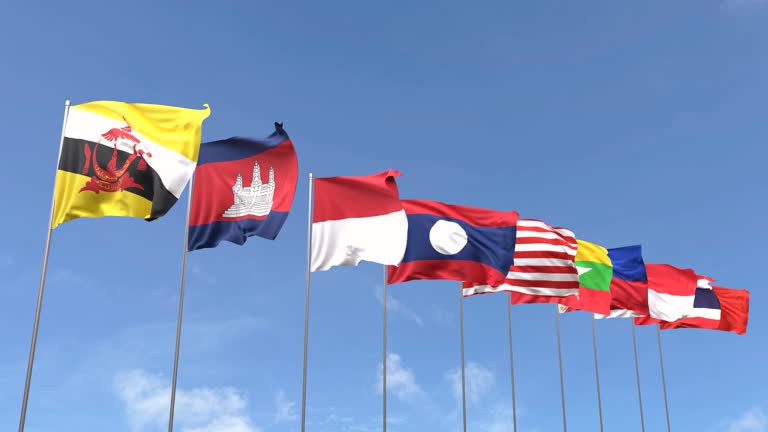
Minilateralism, a form of international cooperation involving a small number of states, has gained significance in Asia over the past few decades. Unlike larger multilateral organizations, minilaterals are micro, issue-focused, and flexible groupings of states. Involving three to nine members, they come together to address concerns that broader transnational bodies such as the United Nations or ASEAN (Association of South East Nations) struggle to respond to in a swift, coordinated, consensus-based manner.
As geopolitical dynamics evolve, especially with China having established itself as a strategic rival of the United States, minilateralism is increasingly perceived as a more flexible and efficient approach to addressing specific regional issues.
Historical Background and Emergence
Minilateralism is not a novel concept. While within academia, the international political economist, Miles Kahler coined the term “minilateralism” back in 1992 (Stewart 2015, 116), such mechanism could be found in earlier 20th-century arrangements, such as the Five Power Defense Arrangements (FPDA), established in 1971 by the UK, Australia, Malaysia, New Zealand, and Singapore to foster regional defense cooperation after Britain withdrew from Southeast Asia. ASEAN itself started as a minilateral in 1967, with Indonesia, Malaysia, the Philippines, Singapore and Thailand cooperating to counter internal and external communist threats. During the Cold War, Asian states indeed established regional groupings apart from US alliances to shape regional cooperation and address common challenges.
The 1990s and early 2000s then saw a rise in multilateralism in Asia, due to a greater incentive to foster integration and cooperation on a broader scale. Organizations such as the Asia-Pacific Economic Cooperation (APEC) forum and the Indian Ocean Rim Association (IORA) gained momentum while ASEAN cemented its role as an Indo-Pacific convenor by integrating new countries.
However, in times of crises, such as the 2004 Indian Ocean tsunami, the limits of said institutions proved apparent, hence encouraging a shift back towards minilateral groupings like the Quad. The latter, formed by the US, Japan, India and Australia and created as the ‘Tsunami Core Group’ managed to urgently deploy “more than 40,000 troops and humanitarian responders” (Grossman 2005, 11). This catalyzed the first version of the Quad (Quadrilateral Security Dialogue) and paved the way for further proactive and transformational diplomacy on security matters among voluntary countries.
In what Malaysian Prime Minister Anwar Ibrahim referred to as an “age of flux” in the Indo-Pacific institutional order, minilateralism offered a nimble and less bureaucratic alternative for states seeking effective responses (Wilson Center). Over the past two decades and in the face of new challenges, such as the US-China rivalry, climate change, and digitalization, minilateralism thus gained momentum and has seemingly become the preferred choice in Asia.
Minilaterals as key actors of the Asian diplomatic scene
Asia today hosts numerous minilateral initiatives not only on security but on trade, climate adaptation, or technology. While primarily focused on a shared interest or matter, minilaterals often “mention their like-mindedness shared values”, the leaders of India, Japan and the US for instance upholding “the fundamental values of freedom, democracy and rule of law” (Qinghong 2021, 126) as well as common interests. However, there is no single definition nor model for these bodies, as observed through their classifications into four types: partnership, major-power-led, sectoral, and issue-based according to the Wilson Center.
Among the most prominent partnerships is the Quad which, although it lacked foresight in addressing future issues by the end of 2004, partly due to “Australia and India’s strong aversion to provoking China “ (Oguma 2023, 129), has lived a so-called revival since 2017 and managed to adapt to an era of great power competition. While lightly institutionalized, Quad 2.0 has cooperated on shaping a rules-based international order for a “Free and Open Indo-Pacific”, on maritime security, on vaccines during the COVID-19 pandemic, on cybersecurity and space since 2021 or on climate change.
Announced in 2021, AUKUS, a trilateral security and technology partnership between Australia, the US, and the UK, notably “aims to support Australia in acquiring nuclear-powered submarines and the necessary infrastructure to upkeep them” according to the United States Studies Center, signaling a pivotal point in regional deterrence dynamics. Similarly, the 2002 Trilateral Strategic Dialogue (TSD) involving the US, Japan, and Australia, underscores the potential for long-term strategic coherence in minilateral formats, and offers an alternative to the traditional US “hub-and-spokes” approach to regional security, or bilateral alliances set up after World War 2 (Tow 2015).
An example of major power led minilateral body, the Lancang-Mekong Cooperation (LMC) is led by China and includes Myanmar, Laos, Thailand, Cambodia, and Vietnam, to support development in the Mekong through urban water management, health security and food safety standards (Grünwald 2021). While framed around regional cooperation, the former is often perceived as a vehicle for Chinese influence 9 Mingjiang, Xue 2024), especially in competing with the US-led Lower Mekong Initiative (LMI), hence raising concern over major powers initiating minilateral mechanisms for their own geopolitical interests (Chheang 2020).
Yet new trilateral groupings such as the US-Japan-Korea Japan, strengthening cooperation against North Korean threats (Indo-Pacific Defense Forum), the US-Japan-Philippines (JAPHUS) initiative and the India-France-Australia cooperation testify to a broader appetite among middle powers to multiply as well as to diversify partnerships in response to China’s assertiveness and growing influence.
Furthermore, well established issue-based minilaterals like the Sulu Sea Trilateral, a defense cooperation vessel against organized crime and terrorist threats among the Philippines, Indonesia, and Malaysia (Parameswaran 2022) or the well-known Malacca Strait Patrols ensuring multinational maritime security cooperation among Indonesia, Malaysia, Singapore and Thailand through patrols and sharing of expertise (MINDEF Singapore) testify to the willingness of middle powers to likewise establish themselves as strategic partners on local issues.
ASEAN and the Institutional Challenge
The increasing preponderance of minilaterals raises concerns about ASEAN centrality and adaptability. As the region’s longest-standing multilateral platform, ASEAN has been the key actor of regional cooperation, ensuring inclusivity and consensus as its distinctive diplomatic way (H.R. Villanueva, G. Manalo 2017). However, such functioning implies slow decision-making and has in the past prevented powerful collective action in case of internal divisions, as testified to by the infamous 2012 failure to produce a joint statement on the South China Sea. Its relevance as focal player on the regional scene is thus increasingly challenged by these multiplying minilateral bodies.
While minilaterals are not anti-ASEAN per se, their ad hoc and more intimist nature paves the way for an increasingly fragmented institutional landscape in the Indo-Pacific (Chong 2024). As a result, overlapping minilaterals could sideline broader community-building goals and become tools for external competition such as the US-China rivalry, as observed through the LMC and LMI competing presence in the Mekong region.
Yet, if implemented strategically, such initiatives may instead come in support of ASEAN processes. Through synergies or mechanisms to nest minilaterals within existing ASEAN frameworks, on matters such as disaster response, food security, or climate change adaptation and mitigation, duplication could be avoided and efficiency maximized.
Strategic Implications: what way forward?
Minilateralism testifies to a global trend in geopolitics: thee of increasingly relying on informal, purpose-driven coalitions over broader multilaterals. The essence of such a shift stems from the dissatisfaction with the inertia of universal bodies and the fast rise of new regional and global challenges needing urgent and targeted answers. Hence, middle powers such as India, Japan or Indonesia are adopting minilaterals to diversify partnerships and hinder risks without committing to inelastic coalitions.
However, such mechanisms carry their own share of challenges. Their flexibility and lack of enforcement mechanisms make them vulnerable to shifts in national priorities and political turnover (Parameswaran 2024). Moreover, their exclusivity risks further disempowering smaller less powerful states, thus exacerbating power asymmetries through discrimination as emphasized by scholar Fulvio Attinà.
In the long run, minilateralism is neither inherently a universal cure nor a threat. Its efficacy will depend on how it is institutionalized and balanced with regional priorities. Minilaterals should become complementary platforms to enhance mutually beneficial cooperation on niche issues while strengthening a multilateral shared rules-based order. This requires a more proactive and strategic approach, where ASEAN takes initiative in shaping the agendas of these groupings and anchoring them to its own normative framework.
References :
Stewart, Patrick. “The New “New Multilateralism”: Minilateral Cooperation, but at What Cost?”, Global Summitry (2015): 116.
Parameswaran, Prashanth. “Minilateralism, ASEAN Centrality and Indo-Pacific Institutional Flux Amid Strategic Competition”, Wilson Center (2024).
Grossman, Marc. “The Tsunami Core Group: A Step toward a Transformed Diplomacy in Asia and Beyond.” Security Challenges 1, no. 1 (2005): 11–14. http://www.jstor.org/stable/26459016.
Parameswaran, Prashanth. “Minilateralism, ASEAN Centrality and Indo-Pacific Institutional Flux Amid Strategic Competition”, Wilson Center (2024).
Qinghong, Chen. “Asia-Pacific Minilateral Cooperation and Its Impact”, China Institutes of Contemporary International Relations, (2021) 126.
Parameswaran, Prashanth. “Minilateralism, ASEAN Centrality and Indo-Pacific Institutional Flux Amid Strategic Competition”, Wilson Center (2024)
Oguma, Shinya. “The Revival of the Quad amidst Great Power Competition”, The Shifting Dynamics of Great Power Competition, National Institute for Defense Studies (2023), 129.
Fraser, Dominique. “The Quad: A Backgrounder.” Asia Society Policy Institute, 16 May 2023, https://asiasociety.org/policy-institute/quad-backgrounder.
Oguma, Shinya. “The Revival of the Quad amidst Great Power Competition”, The Shifting Dynamics of Great Power Competition, National Institute for Defense Studies (2023), 130.
Corben, Tom, Townshend, Ashley, Patton, Susannah. “What is the AUKUS partnership?”, United States Studies Center, (2021).
Tow, William. “The Trilateral Strategic Dialogue, Minilateralism, and Asia-Pacific Order Building”, US-Japan-Australia Security Cooperation, Stimson Center (2015).
Grünwald, Richard. “Lancang Mekong Cooperation: Overcoming the Trust Deficit on the Mekong.” Fulcrum, (2021) https://fulcrum.sg/lancang-mekong-cooperation-overcoming-the-trust-deficit-on-the-mekong/.
Xue, Gong, and Mingjiang Li. “Taking Ideas and Words Seriously: Explaining the Institutionalization of the Lancang‑Mekong Cooperation.” International Relations of the Asia‑Pacific, vol. 24, no. 2, May 2024, pp. 253–287.
Chheang, Vannarith. “Minilateralism in Southeast Asia. Facts, opportunities and risks, Minilateralism in the Indo-Pacific (2020)
Indo-Pacific Defense Forum, “Japan-South Korea-U.S. collaboration key to Indo-Pacific stability, experts say”, July 11, 2025.
Parameswaran, Prashanth. “Indonesia, Malaysia, Philippines Consider Expanding Sulu Sea Trilateral Patrols”, The Diplomat, 19 Apr 2022.
MINDEF Singapore, “Fact Sheet: The Malacca Straits Patrol”, 21 Apr 2015.
H.R. Villanueva, Kevin, G. Manalo, Rosario. “ASEAN Consensus: The Intangible Heritage of Southeast Asian Diplomacy, ASEAN@50 Volume 4 Building ASEAN Community: Political–Security and Socio-cultural Reflections, Economic Research Institute for ASEAN and East Asia, (2017).
Chong, Byron. Navigating Minilateralism: Challenges and Opportunities for ASEAN, Centre on Asia and Globalization, Lee Kuan Yew School of Public Policy, September 30, 2024.
Parameswaran, Prashanth. ‘How Will Minilateral Proliferation Shape Asia’s Regional Architecture?’ The Diplomat, July 1st 2024.
Attinà, Fulvio. “Multilateralism and the Emergence of ‘Minilateralism’: in EU Peace Operations”, Romanian Journal of European Affairs, Vol.8, No.2 (2008): 7.
Comments are closed