Language is a key component of cultural and self-identity, development, as well as political autonomy. Yet, it proves of even more significance in multilingual border regions. This is especially evident in Southeast Asia, where national unity is often pursued through assimilationist policies at the cost of minority languages and communities. This article aims to understand the complex interplay between language, identity and power dynamics in three distinct contexts: the Malay-speaking Muslim minority in Southern Thailand, the Philippines’ Maranao minority linguistic and ethnic diversity, and the multilingual autonomy model of South Tyrol in Northern Italy. It underlines the potential of linguistic diversity to both challenge and enrich these regions, emphasizing the importance of autonomy and inclusive policies in fostering social cohesion and sustainable peace.
Language, Identity, and the Need for Cultural Reconciliation in Multilingual Southeast Asia
- The Case of Southern Thailand’s Malay Muslim communities
The Malay Muslim community in Thailand’s Southern Border Provinces—Pattani, Yala, Narathiwat, and parts of Songkhla—is characterized by a deeply-rooted cultural identity shaped by centuries of history, tradition, and language (Nookua 2011). At the heart of this identity is Pattani Malay, a language widely spoken in daily life, and Classical Malay written in Jawi script, used for religious and educational purposes. These languages are not merely tools of communication but often unrecognized living expressions of cultural heritage, spirituality, and historical continuity hence raising significant challenges for populations in the region.
Among the Malay Muslim community, Pattani Malay is commonly spoken in everyday life, while Southern Thai can, although less frequently, also be used informally (Nookua 2011, 2). Arabic and Standard Malay maintain religious and cultural significance, especially in Islamic education, while Standard Thai dominates formal state domains such as government administration, judiciary systems and public schooling. This diglossic system testifies not only to separated language use but to deeper ethnic and religious identities, distinguishing Malay-Muslims from the Buddhist Thai majority (Nookua 2011, 3) despite their status as integral inhabitants of the region for centuries.
Historically, their acceptance of Siamese suzerainty once coexisted with a degree of local autonomy on education or marriage laws (Pongsudhirak, Bangkok Post 2015). However, post-colonial border realignments and subsequent Thai state policies erased many of these accommodations. This led to perceived discriminations and tensions, with more than 7,753 lives lost and 14,705 wounded in conflict since 2004 (Deep South Watch). In fact, the state’s assimilationist language policies, emphasizing Thai in education and administration, contributed to social alienation and ongoing conflict, as Malay Muslims resist efforts that threaten their linguistic and cultural heritage. The resulting lasting insurgency and social unrest underscore the link between linguistic marginalization and political instability.
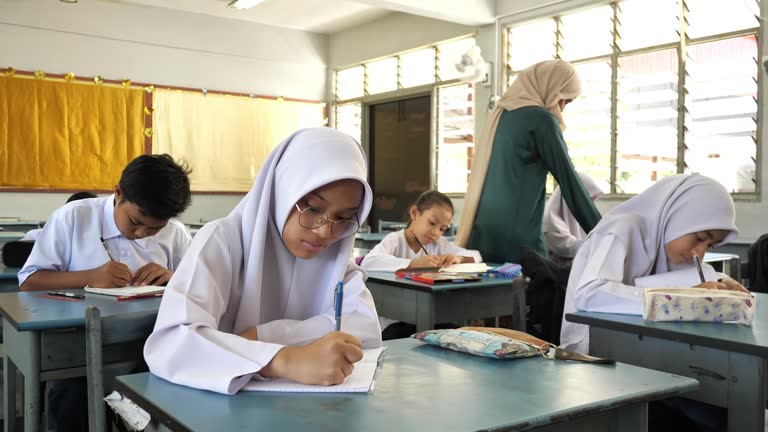
Education policy in Southern Thailand is a crucial area where language intersects with national cohesion and local development. Currently, Thai government schools promote Standard Thai as the primary language of instruction. However, this has systematically created barriers to effective learning for Malay-speaking students, the lack of a mother-tongue-based education presenting undeniable challenges. Premsrirat’s research for instance highlights how this education model has repeatedly led to poor academic performance, school dropout rates, and limited employment prospects for Pattani Malay children (Premsrirat 2008, 1). Additionally, Nookua’s research underscores how Muslim parents have historically often rejected Thai public schools in favor of pondok (Islamic institutions) where Standard Malay and Arabic are taught, reflecting their desire to maintain cultural and religious autonomy.
Social interactions furthermore testify to the underlying power dynamics of multilinguism. Within the community, Pattani Malay remains the cornerstone of daily life and interpersonal communication. It is the language of home, trade, as well as religious and community gatherings. Meanwhile, Standard Thai dominates formal settings such as public administration, media as well as judicial and governmental institutions. Bilingualism, therefore, is not just a linguistic skill but a social necessity, in a rigid, centralized national identity, recognizing Standard Thai as the sole official language. This approach has failed to accommodate the linguistic and cultural uniqueness of the Deep South, hereby deepening alienation and resentment as well as contributing to cycles of conflict and violence.
The continued insurgency in Southern Thailand thus tells of the urgent need for reconciliation strategies stemming from cultural and linguistic inclusion. As advocated for by Thitinan Pongsudhirak, Senior fellow of the Institute of Security and International Studies at Chulalongkorn University, in a Bangkok Post article entitled “Language is the way forward in Deep South” (2015), a more inclusive language policy—one that recognizes Jawi or Pattani Malay as official or co-official in the Deep South—could mark a turning point. Concrete steps—such as using Pattani (with one “t”) in official documents, recognizing Jawi in administrative contexts, and introducing Malay language classes in Thai schools—could offer meaningful gestures of reconciliation. Such proposals would in no way diminish Thai national identity but rather enrich it, showcasing Thailand as a truly inclusive, multicultural nation. It indeed would signal respect and recognition, hence paving the way toward peaceful coexistence and national unity.
This story is not only that of Thailand’s Malay Muslims but in fact, one which often faces minorities in the region and on a global scale. In the Philippines, the story of another Muslim ethnic group, the Maranao, testifies to similar hardships in proactively fostering multilinguist policies and protecting community identities.
2. The Case of the Philippines’ Maranao Communities
The Philippines are another example of a multilingual, multiethnic society where language is deeply tied to identity and political dynamics. With over 170 languages spoken internally, the Philippines’ constitution recognizes Filipino (based largely on Tagalog) and English as official languages, while also theoretically protecting regional and indigenous languages.
Dr. Michael John Aytona Jamora, in his study “Eskwilahan Ago Pangadian: Multilingualism, Literacy Practices, and Cultural Identity Negotiation of Maranao Learners in a Migrant Community” explored literacy and adaptation practices to better understand situated multilingual discourse and traditional customs, and provided recommendations for a facilitated cultural identity negotiation in the country. Grounded in Vygotsky’s sociocultural theory and Brian Street’s “ideological model of literacy,” Jamora documents how literacy practices shape and reflect identity.
He emphasizes how the Maranao (mostly Muslim ethnic groups) hold a strong sense of community, reflected not only in their faith, residential closeness and endogamy but also in their segregation from the dominant group. The study reveals that since participants learn Maranao as their first language at home, Sorsoganon with non-Maranao neighbors, Filipino and English at school and Arabic through their faith, a clear distinction can be made between Maranao and the Christian-Sorsogueños culture. Language is again far more than a means of communication—it is a force of identity, memory, and dignity. The Maraonao’s linguistic heritage is indeed inseparable from their Islamic faith and historical consciousness, and it has thus been often marginalized and excluded from media, and political discourse, influencing interethnic relations and national unity.
Hence, children have to shape their own cultural identities through opposition, assimilation, and straddling (shifting) between the dominant “mainstream” culture and their traditional ethnic customs. This last strategy has notably become not only necessary but especially powerful as it allows learners to maintain cultural roots while engaging with mainstream society—a dynamic also seen in Thai Malay Muslims’ navigating between Pattani Malay and Standard Thai.
Jamora thus advocates for a culturally-sensitive literacy model that respects learners’ identities and supports multilingualism. He recommends integrating traditional knowledge and language into both academic and communal settings. His findings underscore how literacy is not just technical skill but a social practice embedded in power, identity, and belonging.
3. Similarities and the way forward
Both communities (Maranao and Malay-Muslim) hence showcase how multilingualism and cultural literacy are central to identity formation. They reveal the potential for education systems to either bridge or deepen divides, depending on whether they accommodate or erase minority languages and cultures. In this regard future policies should increasingly emphasize on mother-tongue-based multilingual education to improve literacy and preserve linguistic heritage.
As underscored by Walker (1981, 6): “The pattern of language use in a multilingual community tells us much about the attitudes and values that are the driving forces in that society”. Hence, rather than enforce a one-language-fits-all model, states must move toward pluralistic, culturally grounded policies that acknowledge historical contexts and promote dignity for all ethnic groups.
As highlighted by Thitinan Pongsudhirak (Bangkok Post, 2015) other examples from multilingual nations offer valuable perspectives. In New Zealand, Maori is recognized as an official language alongside English and sign language, with efforts increasingly made to incorporate Maori culture and language into public life. Meanwhile in Canada, English and French have equal legal status, particularly evident in Quebec. These arrangements aim to honor historical identities and promote internal peace and social cohesion. Yet, one particularly significant and often cited case of multilingualism is that of South Tyrol.
From Conflict to Coexistence: The Historical Struggle for Linguistic Rights in South Tyrol
4. Lessons from South Tyrol
South Tyrol, located in Northern Italy, is a highly institutionalized multilingual region where German, Italian, and Ladin co-exist as official languages. Often perceived as a model for peaceful multilingual and multicultural coexistence, South Tyrol demonstrates the capacity of language to build bridges between communities when coupled with autonomy, robust inclusive policy-making and mutual respect.
Annexed by Italy from the Austro-Hungarian Empire after World War I, the region experienced harsh Italianization under Mussolini, including the banning of German-speaking schools, forced name changes and cultural erasure. In 1939, the Option Agreement forced German speakers to either keep their Italian citizenship or acquire German nationality through exile to the Reich (Dalle Mulle, Ambrosino 2023, 2).
After World War II, the Gruber-De Gasperi Agreement (1946) and far more efficiently the Second Autonomy Statute (1972) paved the way for the current highly decentralized governance. Marking a shift from assimilationist policies, they consecrated minorities’ constitutional rights, established linguistic equality in administration or employment, and created proportionality mechanisms for political representation and funding. This legal basis de-securitized language conflict, turning multilingualism into the institutional norm. Moreover, the education system is designed to accommodate multilingualism, with separate German and Italian schools, respectively teaching the other’s language, and a Ladin school fostering balanced trilingual proficiency.
Economically, multilingualism facilitates cross-border trade with Austria, Germany, and Switzerland, attracts curiosity and tourism, and fosters innovation, thus enhancing South Tyrol’s competitiveness and social cohesion. The success of the region’s autonomy model lies in its power-sharing mechanisms, which transformed historical ethnic conflicts into stable coexistence through autonomous inclusive governance.
By formalizing language rights and ensuring representation, South Tyrol’s constitutional autonomy provides a safeguard against interference by the central state and enables local governance to implement tailored economic and social policies. While questions still arise regarding the integration of other migrant minorities for whom this system complexifies the process (Franco Rocha, Eurac), this has proved instrumental in balancing language group interests and promoting mutual acceptance over the past decades. Meanwhile, Southern Thailand’s more centralized governance and assimilationist language policies hinder social cohesion, underscoring the importance of minority participation in policymaking.
Closing Remarks
Linguistic minorities are seen as a significant challenge for multicultural regions. Yet, they can enrich them through inclusion in economic and political decision-making, education fostering the use of mother tongues alongside national languages, and infrastructure that enhances mutual respect and social integration.
In conclusion, the cases of Southern Thailand, the Philippines, and South Tyrol illustrate the multifaceted role of language in minority communities. Language functions as a vital vessel of identity, engagement, and political autonomy. While multilingualism requires proactive efforts, particularly in contexts with histories of conflict or assimilationist policies, it offers a space for peaceful and sustainable development. Institutional autonomy, as well as inclusive language policies and education systems are key tools in shaping multilingual regions into models of peaceful coexistence and economic resilience.
References
Autonomy Experience. (n.d). South Tyrol Autonomy Model. South Tyrol – Autonomy Experience Südtirol
Dalle Mulle, Emmanuel, Ambrosino Alessandro (2023). “The 1939 Option Agreement and the ‘consistent ambivalence’ of fascist policies towards minorities in the Italian new provinces”. Geneva Graduate Institute. https://www.graduateinstitute.ch/library/publications-institute/1939-option-agreement-and-consistent-ambivalence-fascist-policies.
Deep South Watch. https://deepsouthwatch.org/th
Franco Rocha, Luana (2020). Multilingualism and Language Policies in South Tyrol. Eurac Research. Multilingualism – really? Understanding language policies in South Tyrol
Jamora, Michael John Aytona, (2025). Eskwilahan Ago Pangadian: Multilingualism, Literacy Practices, And Cultural Identity Negotiation of Maranao Learners in a Migrant Community, Sorsogon State University Sorsogon City.
Lun, Georg. (2022). “The Economic Importance of Linguistic Diversity in South Tyrol and Beyond”. Federal Union of European Nationalities. FUEN – Federal Union of European Nationalities.
Minority Rights Group (2018) Malay Muslims in Thailand. https://minorityrights.org/communities/malay-muslims/
Nookua, Sirikun (2011). The Patterns of Language Use in the Southernmost Provinces of Thailand, Journal of Cultural Approach, Vol 12 n22.https://e-library.siam.edu/e-journal/wp-content/uploads/2018/11/Journal-of-Cultural-Approach-2011-vol12-no22-jan-jun-4.pdf
Pongsudhirak Thitinan (2015), Language is way forward in deep South, Bangkok Post, 3 July 2015. https://www.bangkokpost.com/opinion/opinion/611624/language-is-way-forward-in-deep-south.
Premsrirat, Suwilai. (2008). Language for National Reconciliation: Southern Thailand. Southeast Asian Ministers of Education Organization Secretariat.
Walker, Roland W. (1981) “Language Use at Namatota : A Socioliguistic Profile” The Third International conference on Austronesian Linguistics, Department of Linguistic Research School of Pacific Studies, Singapore.
Photo credit: iStock.
Comments are closed