
Date: Friday, October 24, 2025
Maryam Paredes
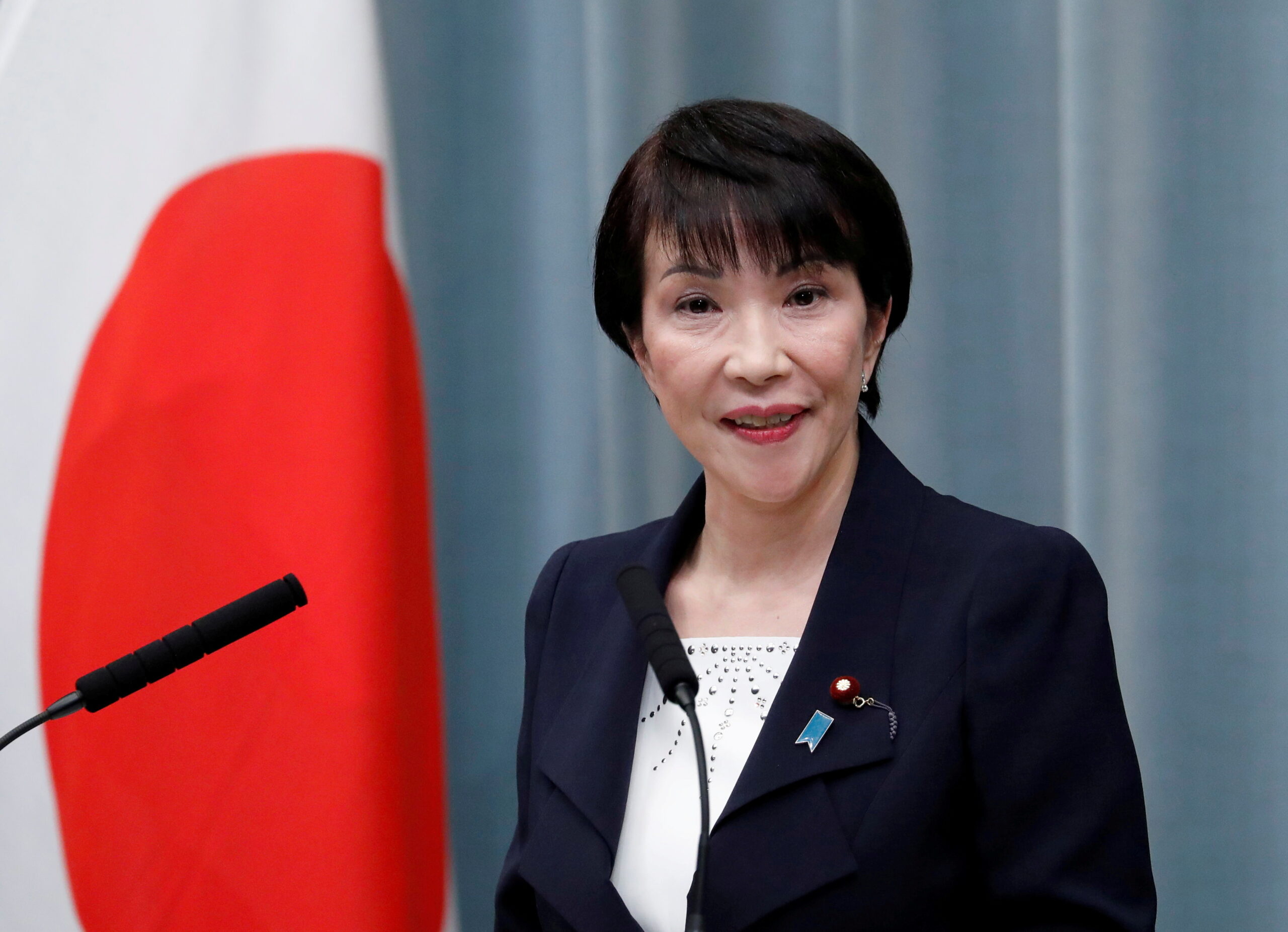
On October 21, 2025, Sanae Takaichi became Japan’s 104th Prime Minister and the first woman to hold the position—a historic milestone. With over three decades of political experience, she now leads the Liberal Democratic Party (LDP) and has formed a coalition government with the Japan Innovation Party (JIP) to address key domestic and international issues.
A panel discussion on October 24, 2025, featuring Professor Kenneth McElwain of the University of Tokyo and political analyst Grant Newsham, a retired U.S. Marine Colonel and expert on Asia-Pacific security, examined the political, economic, and strategic implications of her leadership
The Political Context and the LDP’s Decline
The leadership election for prime minister followed the resignation of the previous LDP leader, prompted by declining support and a series of corruption scandals. The LDP had lost its parliamentary majority in 2024 and performed poorly again in the 2025 House elections. Professor McElwain noted that these setbacks reflected growing public dissatisfaction with a party that had dominated postwar politics for decades. Scandals, particularly those involving the LDP’s ties to the Unification Church, had further eroded trust in the party.
Grant Newsham emphasized the historical and economic dimensions of voter discontent. He observed that Japan has endured decades of economic stagnation, deflationary pressures, and high taxation, creating persistent uncertainty among citizens. Takaichi’s emergence as a candidate was widely perceived as a response to this desire for renewal and reform.
Profile and Political Significance of Prime Minister Sanae Takaichi
Prime Minister Sanae Takaichi is often described as conservative, yet her domestic policies are largely pragmatic. She supports Japan’s national health system and social welfare programs and has proposed increasing defense spending beyond two percent of GDP, marking a notable shift in Japan’s postwar security policy. Coming from a middle-class background and not being a hereditary politician, Takaichi is widely regarded as a capable and trustworthy leader. Although gender was not a focus of her campaign, her election marks a significant step forward for women’s representation in Japanese politics.
Her election—historic as Japan’s first female prime minister—also reflects deeper political change. According to Professor Kenneth McElwain, her leadership will hinge on two main challenges: managing divisions within the government over foreign policy and constitutional reform, and ensuring stability in the coalition with the Japan Innovation Party (JIP), which is new to governance.
Analyst Grant Newsham added that her victory helped preserve unity within the LDP, preventing further internal fragmentation. Many voters’ seeking renewal saw Takaichi as a credible and unifying choice. The coalition agreement between the LDP and JIP includes joint initiatives to address key domestic issues such as inflation, population decline, and economic reform. Though this partnership carries political risks, public sentiment toward it remains cautiously optimistic.
Domestic Challenges and Economic Policy
The panel agreed that Prime Minister Takaichi’s immediate priority is revitalizing Japan’s economy, with inflation control and sustainable growth at the center of her agenda. To relieve pressure on households, the government may reduce provisional taxes such as the gasoline levy, raise the minimum wage, and promote wage growth through targeted reforms. At the same time, restoring public trust will require firm action on corruption and greater transparency in governance.
However, as Grant Newsham noted, these short-term measures must be balanced with deeper structural challenges—an aging population, high taxation, and decades of economic stagnation. Although deflation has shifted to inflation, achieving long-term stability remains difficult. Immigration could help offset labor shortages, particularly in rural areas, but it continues to be politically sensitive.
Building on this, Professor Kenneth McElwain emphasized that economic recovery also depends on public confidence. Expectations about inflation, he explained, strongly influence business investment and consumer spending, shaping Japan’s broader economic trajectory.
Foreign Policy Considerations
Japan’s foreign policy under Prime Minister Takaichi aims to balance relations with the United States, China, and regional partners while strengthening energy security. Her government is expected to pursue diversified trade, cautious engagement with China, and deeper cooperation with Europe and Australia. The panel noted that Japan has steadily expanded its strategic presence in Southeast Asia and Europe, a trend Takaichi is likely to maintain through quiet diplomacy and selective strategic announcements to reinforce Japan’s global role.
Conclusion
Prime Minister Sanae Takaichi’s election marks a historic step for gender representation and a defining moment in Japan’s political evolution. Her leadership blends pragmatic domestic policies with a firm stance on defense, as she works to manage coalition dynamics, drive economic reform, and address demographic challenges. The panel expressed optimism that her administration could play a pivotal role in shaping Japan’s economic, political, and strategic future.
Comments are closed