
Note: The news was monitored and reviewed by HDFF’s team to produce this article.
The concern of food security for 300,000 residents in Karenni (Kayah) State, “Will Karenni Face Food Insecurity in 2026?,” was featured by the local media Kantarawaddy Times.
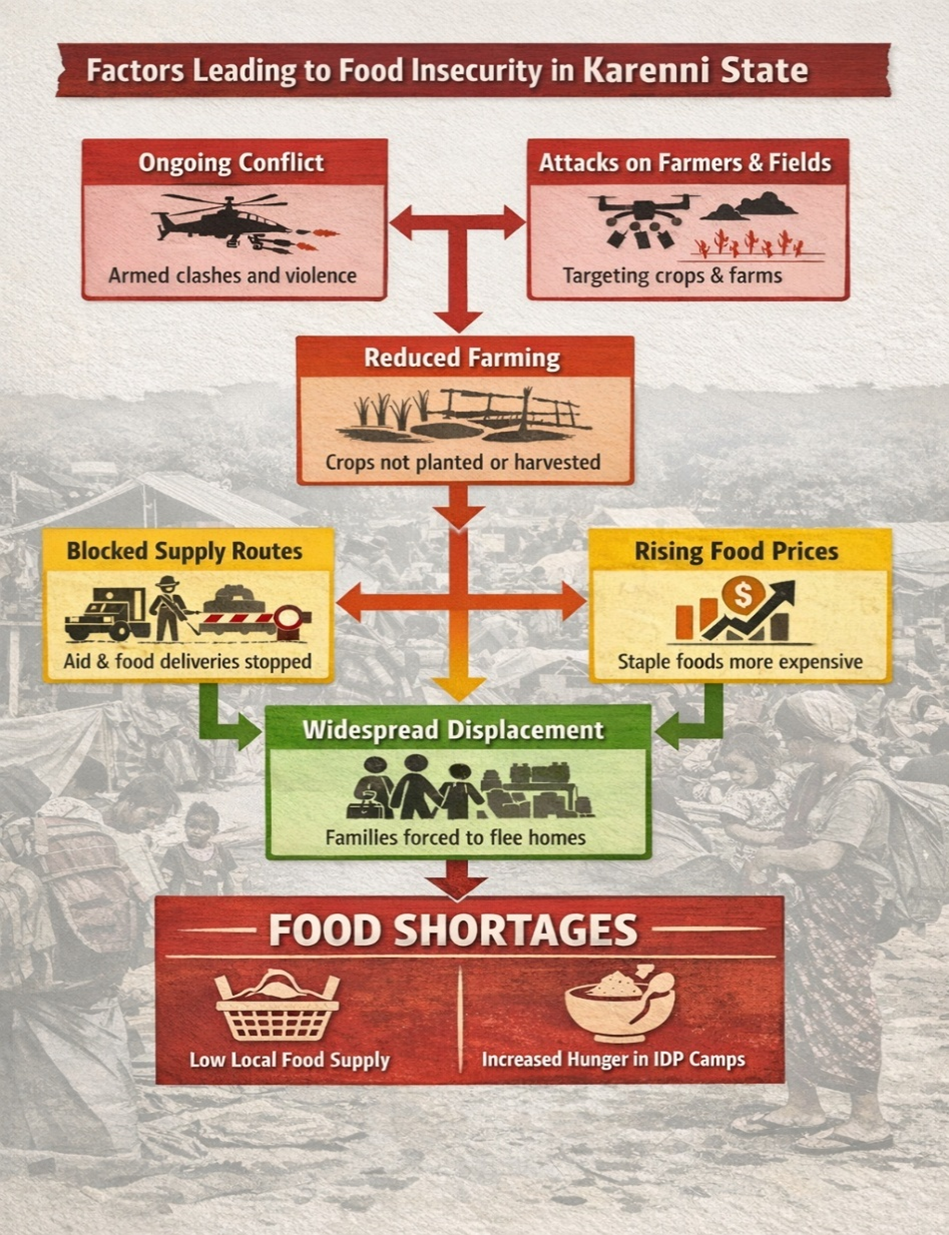
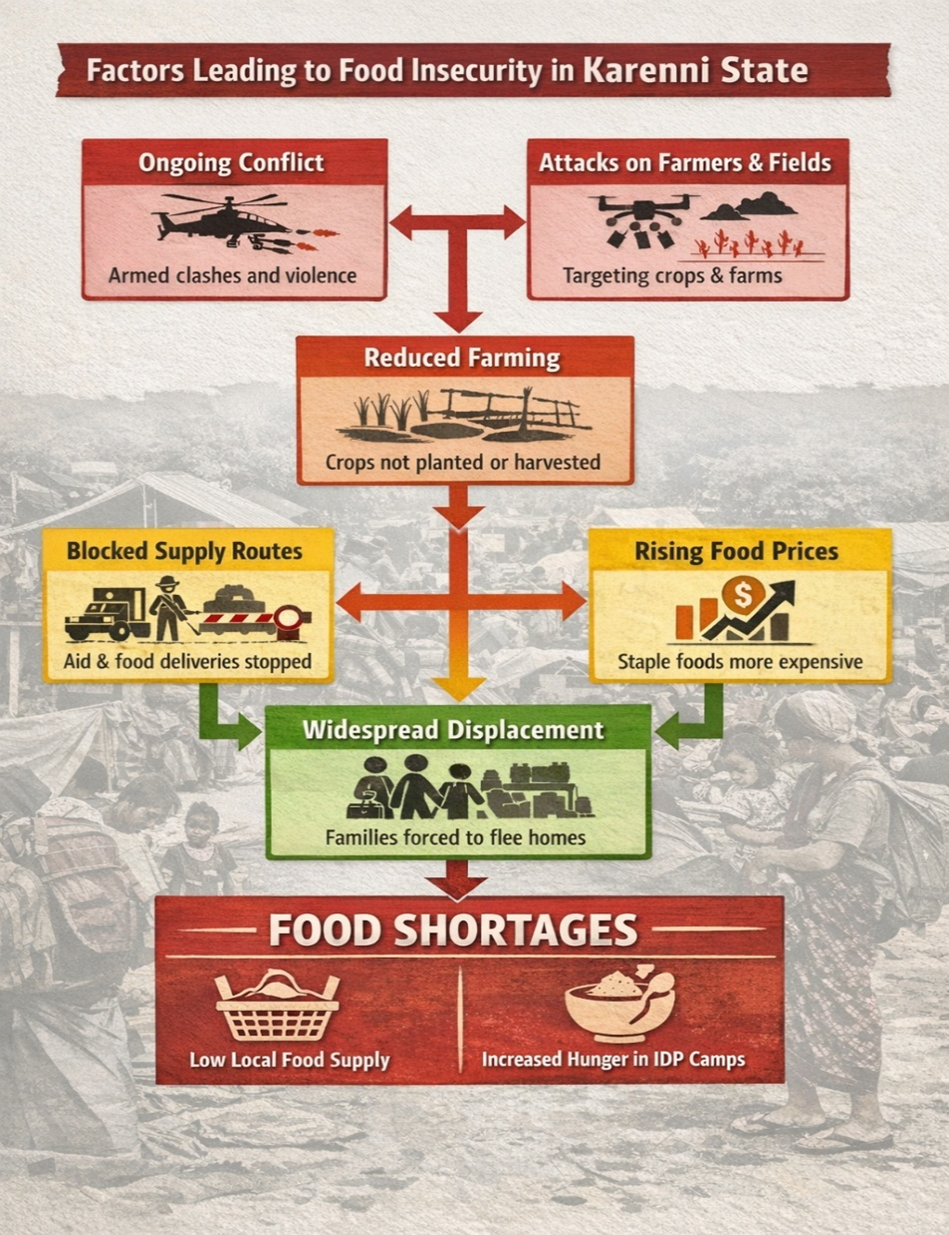
Factors causing the food security issues in the Karenni State in Myanmar
🌾 Key Findings
• Humanitarian Warning:
The United Nations World Food Programme (WFP) reports that around 1 million people in Myanmar urgently need life-saving food aid, and over 12 million could face hunger in 2026.
• Food Security Risk in Karenni State:
Karenni State — with a population around 300,000 — may see serious food shortages in 2026 due to reduced crop production.
📉 Main Causes
• Decline in Farming:
Cultivable rice land decreased in 2025 because of flooding and ongoing military conflict, deterring farmers from planting crops.
• Conflict Disruption:
Military offensives in areas like Pekhon and Loikaw have prevented planting and harvesting, with some people too afraid to work fields.
• Long-Term Displacement:
Since the 2021 coup, many local residents have been displaced and now rely on small-scale farming or external food aid, undermining stable food access.
• Losses From Natural Disasters:
Flooding and landslides have destroyed thousands of acres of farmland, further reducing food production opportunities.
📊 Local Perspectives
Local officials and displaced people warn that food shortages are already increasing in IDP camps and may worsen unless conditions improve.
• Increased Food Imports:
To make up for shortfalls, up to 35 % of food in the state now comes from outside sources.
• Aid Needs:
The WFP estimates $125 million USD is needed to aid millions at risk in Myanmar in 2026.
“If the military situation continues like this in 2026, food needs … could become even more concerning. … farmers are being attacked daily by drones … that is why … food insecurity will be among the most serious concerns in 2026,” a woman activist in IDP issues said.
📅 Karenni Food Security Timeline (2021–2026)
🔹 2021 — Coup & Rising Conflict
- After the military coup in early 2021, conflict rapidly expanded across Myanmar, including Kayah (Karenni) State — once known for rice farming and subsistence agriculture.
- Markets and supply routes started deteriorating, with food and fuel becoming scarce and very expensive in key townships such as Loikaw, Hpruso, Bawlakhe and others due to fighting and transport disruptions. Burma News International
📌 2022–2023 — Displacement & Farming Collapse
- By 2023, nearly half of Karenni State’s population had been displaced by fighting between resistance groups and the military council, pushing tens of thousands into IDP (internally displaced person) camps. Karen News
- The rapid escalation in displacement cut agricultural labor and production, reducing local food output while demand soared among displaced families. Karen News
📉 2024–2025 — Severe Drop in Cultivable Land
- By 2025, estimates from local aid groups indicated that only about ~3 % of pre-coup agricultural land in Karenni remained usable for farming — most fields were either in active conflict zones or inaccessible due to insecurity. MM Peace Monitor
- Farmers couldn’t safely plant or harvest rice and other crops because fighting and military offensives directly threatened fields and workers. MM Peace Monitor
- Farmers couldn’t safely plant or harvest rice and other crops because fighting and military offensives directly threatened fields and workers. MM Peace Monitor
- In key rice-producing townships like Mobye and Pekhon, civilians were forced to flee farms without harvesting because of intensified conflict, often leaving hundreds of acres of fields unattended. Burma News International
📌 2025 – Targeting of Agriculture & Rising Prices
- In late 2025, human rights groups reported that junta forces were attacking farmlands and farmers directly, shelling paddy fields and threatening rural communities during harvests. Burma News International
- These actions disrupted agricultural cycles, reducing crop yields and increasing risk of food scarcity at the local level. Burma News International
- These actions disrupted agricultural cycles, reducing crop yields and increasing risk of food scarcity at the local level. Burma News International
- Transport blockages and conflict-related obstructions significantly curtailed the flow of goods. As a result, food and commodity prices skyrocketed — rice and staples became much less affordable for both farmers and displaced families. Burma News International
📌 Late 2025 – Famine Fears and Aid Blockades
- By November 2025, the Karenni Human Rights Group (KnHRG) warned that deliberate targeting of crops and interference with supply routes had raised the risk of famine in the state. ENG.MIZZIMA.COM
- They estimated that tens of thousands of people, especially in IDP camps, might face severe hunger if conditions continued without adequate food aid. ENG.MIZZIMA.COM
- They estimated that tens of thousands of people, especially in IDP camps, might face severe hunger if conditions continued without adequate food aid. ENG.MIZZIMA.COM
- The military council’s checkpoints and roadblocks also blocked food deliveries and humanitarian assistance — restricting aid flow into isolated and conflict-affected areas. Karen News
- Most of the identified agricultural land remains inaccessible or unsafe for cultivation due to ongoing conflict, meaning local food production cannot recover quickly without improved security. MM Peace Monitor
- Without substantial increases in humanitarian assistance and safer access for farmers, communities and displaced groups within Karenni State are likely to continue facing very high risk of food shortages or famine conditions. Burma News International
References:
Burma News International/ Myanmar Peace Monitor
Kantarawaddy Times
Karen News
Mizzima News Media
United Nations World Food Programme (WFP)
Comments are closed