
Executive Summary
This research paper establishes the relationships between three different variables, namely socio-economic development, business development and media literacy. However, beyond these relationships, the background of media literacy and how it came to be is established, underscoring how its definition has changed from being a consumer to being a prosumer.
Moreover, case studies and prior literature are discussed and emphasized to denote the importance of media literacy in the business sphere and in the socio-economic context. In particular, for the effects of media literacy in the business context, a case study of how a rural village in Japan began earning 2.6 million USD annually via the increase in media literacy is mentioned.
Primary research was also conducted to establish a correlation between the three different variables, yielding high levels of correlation for all pairs. This emphasizes the intertwining relationship of these three different variables. However, it must be noted that the research only shows correlation and does not show causation. This is one of the limitations of this paper and as such, further research should be done with more complex statistical computing to establish a more concrete and nuanced relationship between the aforementioned variables. Nevertheless, the result’s lack of causal links notwithstanding, it still reveals that there is a relationship between the variables albeit the complexity is unknown.
Finally, this paper discusses the actions that different organizations and the government can do to increase the media literacy of the public. Examples of initiatives that have been implemented are also discussed to underscore their feasibility and their effectiveness.
The purpose of this paper is to reveal the intertwining nature of these variables and to bring attention to how business development and socio-economic development can be improved by providing individuals with the ability to use a device that we typically take for granted. Empowerment is now just a click away if governments, non-governmental organizations and corporations would work together to implement all-inclusive and wide-reaching media literacy initiatives.
Abstract
Media literacy is increasingly recognized as a crucial competency for fostering socio-economic development and facilitating participation in international trade. By equipping individuals and organizations with the ability to critically access, evaluate, and use media, societies can mitigate misinformation, enhance digital participation, and promote inclusive growth. This paper explores the interrelationship between media literacy, business development, and socio-economic development. It frames media literacy as both a trade enabler and a development catalyst, examines its contributions to the Sustainable Development Goals (SDGs), and proposes strategic actions for policymakers, businesses, and civil society. The study concludes that embedding media literacy into national development and trade strategies strengthens resilience, inclusivity, and competitiveness in the global economy.
Introduction
In an era where digital platforms shape communication, commerce, and culture, media literacy has become essential for socio-economic development and international trade. Globalization has not only increased the interdependence of economies but also highlighted the risks of misinformation, fraud, and exclusion in digital markets. As such, enhancing media literacy will not only bolster trade and socio-economic development but it will also minimize the negative effects of the media.
The definition of media literacy has evolved over time. Before the advent of Web 2.0, the focus was primarily on the consumption of media as businesses dominated its production (Aufderheide, 1993). However, once Web 2.0 came around, production became easier, allowing those who were once just consumers to engage and produce their own content (Ugurhan et al. ,2020). Due to this, the previous definition of media literacy became obsolete and New Media Literacy (NML) was born.
Nowadays, media literacy can be defined as a combination between information literacy and digital literacy (Tugtekin and Koc, 2019). However, there is more nuance to the term. Aware of the shifting paradigm, Chen et al. (2011) devised a framework to explain media literacy with the use of 4 different dimensions. These dimensions are functional consuming (FC), critical consuming (CC), critical prosuming (CP) and functional prosuming (FP).
FC refers to the capacity to use a digital tool and understand and consume the content posted on it. This occurs on the superficial level. CC refers to the ability to evaluate, analyze and critique digital content. CP refers to the ability to use a digital tool to produce content and understand its implications. Individuals at this level are also capable of interacting with other people online, establishing a proper online presence. FP alludes to individuals who can use digital tools to produce content at the superficial level but not understand its implications. Critical prosumers and consumers are aware of the political, social and cultural aspects of a media post, allowing them to more effectively understand, analyze and create content (Refer to figure 1) .
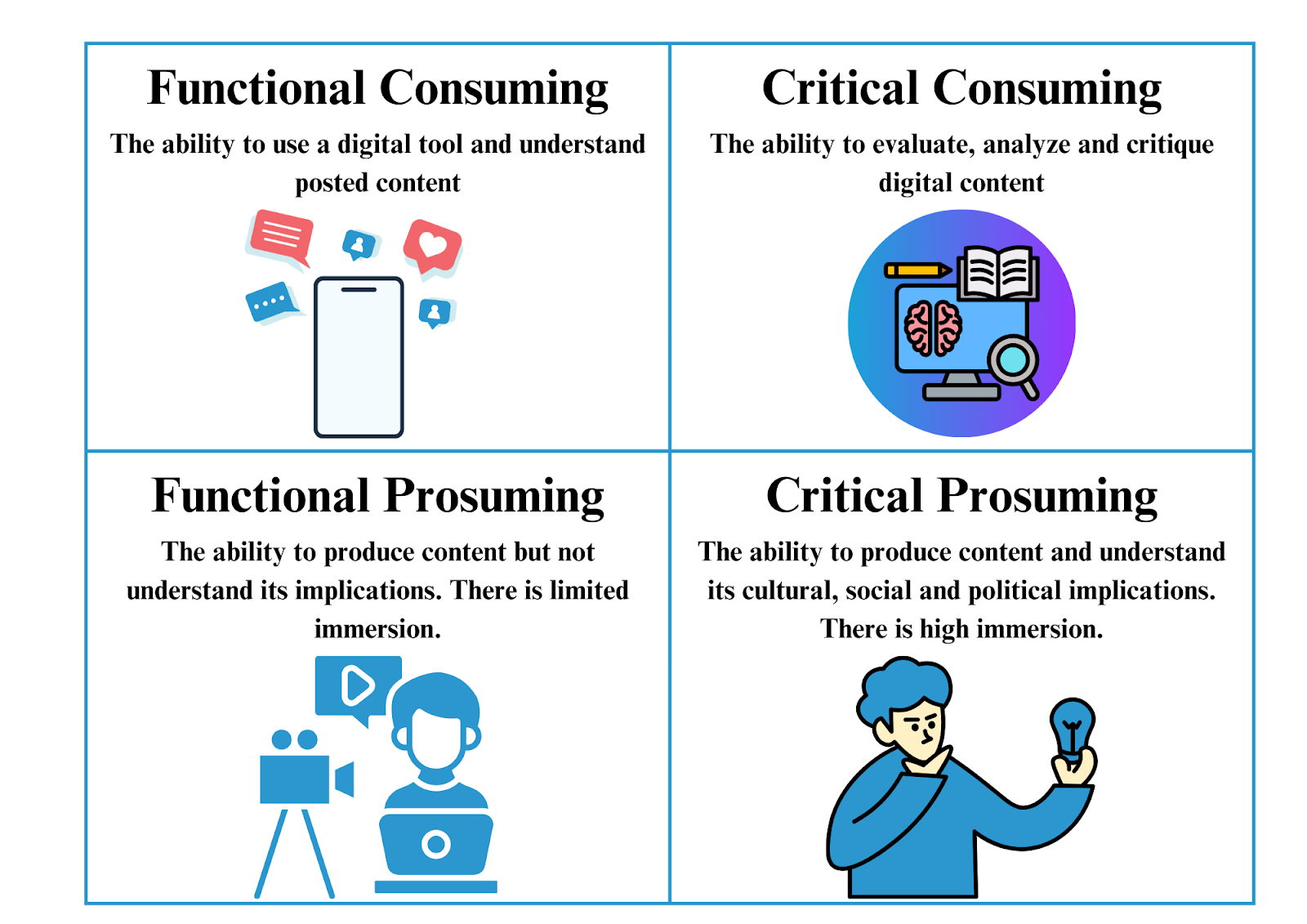
Figure 1: A breakdown of the definitions of FC, FP, CC and CP
Ideally, for the optimal usage of digital tools in business for the purpose of advertising or selling, one should be a critical prosumer or at the very least a functional prosumer. Due to the media’s importance in business ventures, this paper develops a framework to explain the connections between businesses (trade and small and medium sized enterprises), socio-economic development initiatives and media literacy, and suggest ways of enhancing media literacy in the general population.
Literature Review
Media Literacy as a Trade Enabler
Media literacy empowers small and medium-sized enterprises (SMEs), entrepreneurs, and exporters to effectively use digital platforms such as Facebook, YouTube, and e-commerce portals to reach global markets. By critically engaging with information and verifying credibility, businesses reduce risks from fraud, expand consumer trust, and enhance cross-cultural communication (Arsalani et al., 2025). This benefit of media literacy has been consistently proven in literature. In a case study in Lagos, Nigeria, Oluwakemi (2019), employing statistical methods, found that digital literacy has a positive effect on entrepreneurial returns as well as employee productivity with social networking services having the highest influence compared to other forms of media such as blogs, photo sharing sites and web search engines.
Beyond statistical methods, particularly interesting is the successful case of a rural village in Japan called “Kamikatsu”. Kamikatsu was a village predominantly made up of older folk and it did not have any competitive enterprises but after just one venture that involved the leveraging of the internet, the village started bringing in 2.6 million USD a year (Kawamorita et al., 2020). How was this possible?
The answer lies in leaves. In Japan, there is a high demand for decorative leaves and as such, an organization called “Irodori Company” would send out data displaying the demand of particular types of leaves to the “elder women entrepreneurs” of the village via the internet and they were put in charge of gathering these products. Kamikatsu is located in a mountainous area and as such, the leaves were easily discoverable around the village. However, creativity eventually set in as the women started growing the leaves themselves instead of just searching for them. This particular case shows how media literacy can turn a rural village with no economic importance into one that prospers. All it takes is knowledge of the internet and a business mindset to understand what is in demand.
Furthermore, research indicates that media literacy interventions can meaningfully enhance critical thinking and help resist misinformation—skills that are essential for global market navigation (Anstead, 2025; Pennycook et al., 2021). In parallel, evidence from trade and SME policy highlights that digitalisation changes the scale, scope, and speed of trade, and that SMEs that digitalize are better positioned to internationalize (OECD, 2021; OECD, 2023a; World Trade Organization, 2021, 2022). Moreover, governance of cross-border data and the persistence of a data divide shape firms’ ability to participate in digital trade (The United Nations, 2021).
Media Literacy as a Development Catalyst
At the national and community levels, media literacy fosters citizen empowerment, democratic participation, and socio-economic inclusion. It enhances access to education, supports marginalized groups, and encourages women and youth participation in the digital economy. Finland’s national media education strategy demonstrates how institutionalized media literacy strengthens resilience and civic engagement (OECD, 2023b). Technology-driven initiatives such as the Economic Development Application (EDA) significantly improved student competencies (Mukhtar, 2021).
At the same time, structural digital divides limit who can benefit: for example, the United Nations (2021) reports that only about one in five people in less economically developed countries (LEDCs) use the internet, typically at lower speeds and higher prices, reinforcing a data divide. UNESCO’s global Media Information and Literacy (MIL) assessment framework provides governments with tools to integrate and measure media literacy across sectors (UNESCO, 2024).
Media Literacy and its Contribution to the Sustainable Development Goals (SDGs)
Media literacy contributes directly to several SDGs:
– SDG 4 (Quality Education): Promotes critical thinking and digital competencies (UNESCO, 2024).
– SDG 8 (Decent Work and Economic Growth): Enables SMEs and entrepreneurs to access global trade fairly; digital skills are now required for most jobs (National Skills Coalition, 2023; OECD, 2021).
– SDG 10 (Reduced Inequalities): Bridges the digital divide by empowering marginalized communities (The United Nations, 2021).
– SDG 16 (Peace, Justice, and Strong Institutions): Enhances resilience to misinformation, fostering trust in governance (Anstead, 2025; Roozenbeek & van der Linden, 2019).
– SDG 17 (Partnerships for the Goals): Strengthens collaboration between governments, businesses, and civil society, including through eTrade Readiness and digital trade cooperation (The United Nations, 2022; World Bank, 2023)
Interlinked Cycle: Trade, Development, and Media Literacy
Ultimately, the relationship between business development, socio-economic development and media literacy is cyclical. Trade generates income and resources that fund development initiatives such as education and infrastructure. In turn, development fosters media literacy by equipping citizens with critical skills to navigate digital economies. A media-literate society sustains competitiveness by enabling informed participation in international trade, thus reinforcing the cycle (See figure 2). This paper aims to statistically test the viability of this framework.
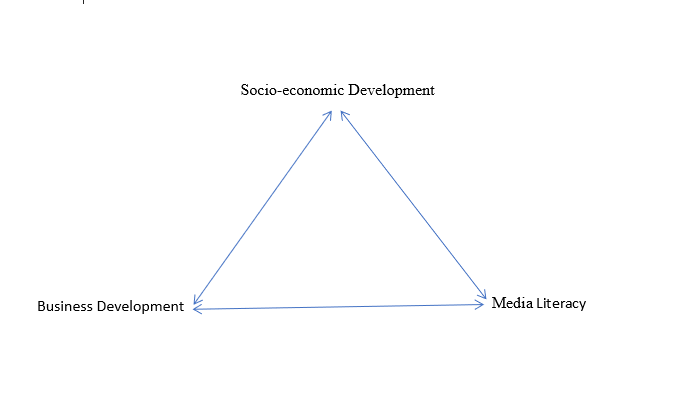
Figure 2: Framework depicting the relationship between media literacy, socio-economic development and business development
Methodology
46 countries were used for the study as their media literacy index (MLI) was readily available via the research done by the Open Society Institute Sofia (2023). The gross domestic product per capita (GDP per capita) and Human Development Index (HDI) of each country were extracted to be used as indicators of business development and socio-economic development respectively. All of the data were from 2023.
Using Tableau, the relationships between MLI, GDP and HDI were established at a confidence interval of 95 percent. Only the correlation was identified, not the causation. As such, the results must be interpreted carefully. Pearson’s correlation coefficient was employed.
Results
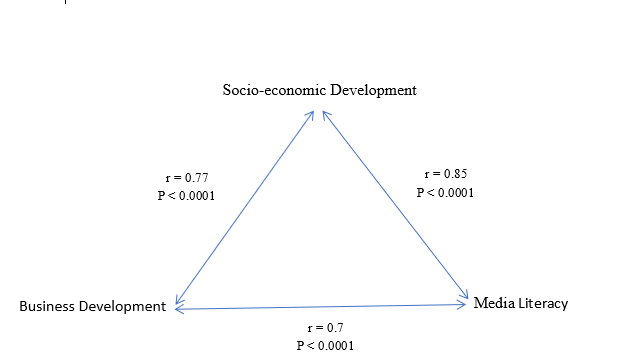
Figure 3: The Correlative Relationships Between the Three Variables
According to figure 3, all the variables were highly and positively correlated. The correlation coefficient of business development and socio-economic development was 0.77 with a p- value of lower than 0.0001, indicating significance. Meanwhile, media literacy and socio-economic development had a correlation coefficient of 0.85 and media literacy and business development had a correlation coefficient of 0.7. Both of these relationships had a significant p-value of lower than 0.0001. These results suggest the association and intertwining nature of these variables.
Discussion
Strategic Actions for Impact (Linked to SDGs)
To take advantage of this framework, the following actions are recommended:
1. Policy Integration: Governments should embed media literacy in national education, trade, and development policies. It is imperative that people are educated about the media in their childhood, a proposition only possible if governments and public schools collaborate to devise an effective framework for media literacy education. UNICEF has established that two-thirds of children globally do not have access to the internet or mobile devices which has negative implications on their digital skills when they grow up (Childhood in a Digital World, 2025). In this technologically-driven world, digital skills are a gateway to opportunities. As such, governments must devote their resources to ensuring that children have access to devices and the internet as well as the necessary education to exploit them while minimizing its harm.
The internet is a double-edged sword. Take a study from Mongolia for example. According to Bayar et al. (2024), they found that children had low self-regulation when it came to media usage and some children were unable to distinguish between the media and reality as some acknowledged that the media was a truthful reflection of the real world. They also found there to be a low level of media literacy education as the concept was not prioritized in the system, further underscoring the need for a comprehensive approach to childhood media education.
Georgia is an example of what governments can do to integrate media literacy into the formal education system. In collaboration with the Communication Commission, the Ministry of Education and Science of Georgia has trained 1,600 teachers in various cities in Georgia, including Tbilisi, the capital (Razmadze, 2025). Training modules, an educational standard for media literacy and a manual for teachers have also been developed to support them in educating their pupils. Media literacy has been incorporated into the curriculum in the form of an elective, a club and a project-based learning component, further bolstering the media competencies of students.
2. Business Investment: Corporations should invest in employee digital literacy training and consumer education. This has become more important than ever after the Covid-19 pandemic which caused distance working to become feasible. Digital training is essential, not just because workers need to be aware of how to use the tools necessary for their work but to also be capable of distinguishing between fake and real information. Digital training is also necessary to produce content that resonates with customers and interpret market trends to adapt accordingly (Arsalani et al., 2025). Organizations such as “Digital Norilsk Nickel”, a company based in Russia, have launched digital platforms in which employees can learn about the media and bolster relevant capacities (Yarnykh, 2021).
3. Community Programs: NGOs and grassroots initiatives should deliver media literacy programs to vulnerable populations. For instance, in countries where there is a high level of gender inequality, media literacy projects should be provided to women to empower them and offset the inequality as well as provide them with more opportunities. In Nigeria, a country with a gender inequality index of 0.677 in 2023, the Lola Cater for the Needy Foundation launched an initiative called WeTechHer to teach digital skills to 500 girls aged between 8 to 18 years old and revealed a book that talks about girls that have succeeded with digital skills ((United Nations, n.d.; Anofi, 2025). This book is called “Tech Queens: The Code to the Future” and its purpose is to encourage girls along with challenging the country’s gender inequality.
Refugees are another vulnerable group that can benefit from the support of NGOs. According to a policy round table hosted by Youth Skills, the needs of refugees in different European Union countries differ, suggesting the need for research and country-specific information to inform the actions of NGOs (Donoso, 2023). Some countries, for instance, may lack the proper infrastructures for these refugees to be able to use the internet while some refugees may not have access to digital literacy education or to technological devices. Identifying the problems via research is vital before any action is done.
4. Interorganizational Cooperation: Organizations need to cooperate to effectively deliver education on digital literacy. NGO programs targeting certain groups can work as short term solutions; however, due to the systematic nature of digital literacy, it is essential that the government is involved to create long term and systematic changes like in the case of Georgia. Partnerships between NGOs and the government can also increase the quality of support. In the case of WeTechHer, the Lola Cater for the Needy Foundation enacted their initiative in collaboration with the Federal Ministry of Youth Development and the Committee of States’ Commissioners of Education.
Businesses should also cooperate with the government as stakeholders in the education system to allow for regular updates of the curriculum in accordance to in-demand digital skills. This will not only benefit students but also the businesses in the long term due to influxes of workers with desired qualities.
Considerations for Future Research
In this study, only the correlation of the three variables was identified. As such, it is impossible to infer a causal link between them. Future research should attempt to identify the extent in which the variables cause the other and due to the multifaceted nature of development, characterized by a myriad of influencing factors, these factors should be identified and controlled to more precisely retrieve the statistical effects media literacy has on both business and socio-economic development.
Conclusion
Media literacy is not merely a communication skill but a strategic tool for advancing inclusive development and international trade. By reducing risks, fostering trust, and empowering citizens, it strengthens the global economy while advancing the Sustainable Development Goals. Future policy and research should further explore quantitative impacts of media literacy on trade efficiency and socio-economic resilience.
References
Anofi, D. (2025, May 25). NITDA, NGF, and others applaud NGO for empowering 500 girls with digital skills. The Nation Newspaper. https://thenationonlineng.net/nitda-ngf-others-applaud-ngo-for-empowering-500-girls-with-digital-skills/
Anstead, N., Edwards, L., Livingstone, S., & Stoilova, M. (2025). The Potential for Media Literacy to Combat Misinformation: Results of a rapid evidence assessment. International Journal of Communication. https://ijoc.org/index.php/ijoc/article/view/23549
Arsalani, A., Rahmatian, F., & Hosseini, S. H. (2025). Media Literacy for Business Personnel: A Strategic Approach for Better Efficiency. Code, Cognition and Society.
Aufderheide, P. (1993). Media literacy. A report of the National Leadership Conference on Media Literacy. https://eric.ed.gov/?id=ED365294
Bayar, C., Su, H., & Alatengsuhe, A. (2024). Current status of media literacy education for children. Advances in Social Behavior Research, 8(1), 26–31. https://doi.org/10.54254/2753-7102/8/2024064
Chen, D.-T., Wu, J., National Institute of Education, Nanyang Technological University, Singapore, Wang, Y., & School of Education, University of Alabama at Birmingham, USA. (2011). Unpacking New Media Literacy. Journal of Systemics, Cybernetics and Informatics. https://www.iiisci.org/Journal/PDV/sci/pdfs/OL508KR.pdf
Childhood in a digital world. (2025). United Nations Children’s Fund (UNICEF). https://www.unicef.org/innocenti/media/11296/file/UNICEF-Innocenti-Childhood-in-a-Digital%20World-report-2025.pdf
Donoso, V. (2023). Empowering Young Refugees through Digital Skills: Key Insights from a Policy Roundtable Discussion. In Zenodo (CERN European Organization for Nuclear Research). https://doi.org/10.5281/zenodo.8421278
Hu, B., Ju, X., Liu, H., Wu, H., Bi, C., & Lu, C. (2023). Game-based inoculation versus graphic-based inoculation to combat misinformation: a randomized controlled trial. Cognitive Research Principles and Implications, 8(1), 49. https://doi.org/10.1186/s41235-023-00505-x
Kawamorita, H., Takahashi, N., & Demiryürek, K. (2020). Rural Women Entrepreneurship and Media Literacy: Experience from Japan and Turkey. Aalborg University Library, 1(3), 361–383. https://doi.org/10.5278/njmm.2597-0445.5898
Mukhtar, S., & Putri, K. Y. S. (2021). Technology integrated media literacy in economic studies on higher education. Mukhtar | Journal of Social Studies Education Research. https://jsser.org/index.php/jsser/article/view/2924/490
National Skills Coalition. (2023, February). Closing the digital skill divide – National Skills Coalition. https://nationalskillscoalition.org/resource/publications/closing-the-digital-skill-divide/
OECD. (2021). The digital transformation of SMEs. OECD Publishing. https://doi.org/10.1787/bdb9256a-en
OECD. (2023a). Key issues in digital Trade Review. https://doi.org/10.1787/b2a9c4b1-en
Oluwakemi, O. T. (2019). Digital literacy and entrepreneurial returns among small business owners in Lagos State, Nigeria. In Education & Science Journal of Policy Review and Curriculum Development (No. 2). https://internationalpolicybrief.org/wp-content/uploads/2023/10/ARTICLE1-90.pdf
OECD.(2023b). Media Literacy Education System. https://www.oecd.org/content/dam/oecd/en/publications/reports/2023/02/mis-and-disinformation_c584ff91/media-literacy-education-system_28535133/d067f517-en.pdf
Open Society Institute Sofia. (2023). The Media Literacy Index 2023. In Measuring Vulnerability of Societies to Disinformation. https://osis.bg/wp-content/uploads/2023/06/MLI-report-in-English-22.06.pdf
Organization, W. T. (2022). World Trade Report 2022. In the World Trade Report. https://doi.org/10.30875/9789287053961
Pennycook, G., Epstein, Z., Mosleh, M., Arechar, A. A., Eckles, D., & Rand, D. G. (2021). Shifting attention to accuracy can reduce misinformation online. Nature, 592(7855), 590–595. https://doi.org/10.1038/s41586-021-03344-2
Razmadze, M. (2025, August 7). Media literacy and digital skills expanded in Georgian schools. Georgia Today. https://georgiatoday.ge/media-literacy-and-digital-skills-expanded-in-georgian-schools/
Roozenbeek, J., & Van Der Linden, S. (2019). Fake news games confer psychological resistance against online misinformation. Palgrave Communications, 5(1). https://doi.org/10.1057/s41599-019-0279-9
The United Nations. (2022). Fast-tracking implementation of eTrade Readiness Assessments – Second edition |. In UN Trade and Development (UNCTAD). https://unctad.org/publication/fast-tracking-implementation-etrade-readiness-assessments-second-edition
The United Nations. (2024, February 6). Global Media and Information Literacy Assessment Framework. UNESCO. https://www.unesco.org/en/articles/global-media-and-information-literacy-assessment-framework
Tugtekin, E. B., & Koc, M. (2019). Understanding the relationship between new media literacy, communication skills, and democratic tendency: Model development and testing. New Media & Society, 22(10), 1922–1941. https://doi.org/10.1177/1461444819887705
Ugurhan, Y. Z. C., Kumtepe, E. G., Kumtepe, A. T., & Saykili, A. (2020). FROM MEDIA LITERACY TO NEW MEDIA LITERACY: A LENS INTO OPEN AND DISTANCE LEARNING CONTEXT. Turkish Online Journal of Distance Education, 21(Special Issue-IODL), 135–151. https://doi.org/10.17718/tojde.770953
United Nations. (n.d.). Gender Inequality Index. Human Development Reports. https://hdr.undp.org/data-center/thematic-composite-indices/gender-inequality-index#/indicies/GII
United Nations. (2021). DIGITAL ECONOMY REPORT 2021. United Nations Conference on Trade and Development.
World Bank. (2023). Digital Trade for Development. https://openknowledge.worldbank.org/server/api/core/bitstreams/83372f16-564f-4af9-9e2d-89bb5290cb6c/content
World Trade Organization. (n.d.). WORLD TRADE REPORT 2022. https://www.wto.org/english/res_e/booksp_e/wtr22_e/wtr22_e.pdf
World Trade Organization. (2021). WORLD TRADE REPORT 2021. https://www.wto.org/english/res_e/booksp_e/wtr21_e/01_wtr21_e.pdfYarnykh, V. (2022).
Technologies in the Corporate Model of Media Education: Opportunities and Prospects. DESIDOC Journal of Library & Information Technology. https://www.researchgate.net/publication/353369536_Media_Technologies_in_the_Corporate_Model_of_Media_Education_Opportunities_and_Prospects
Comments are closed