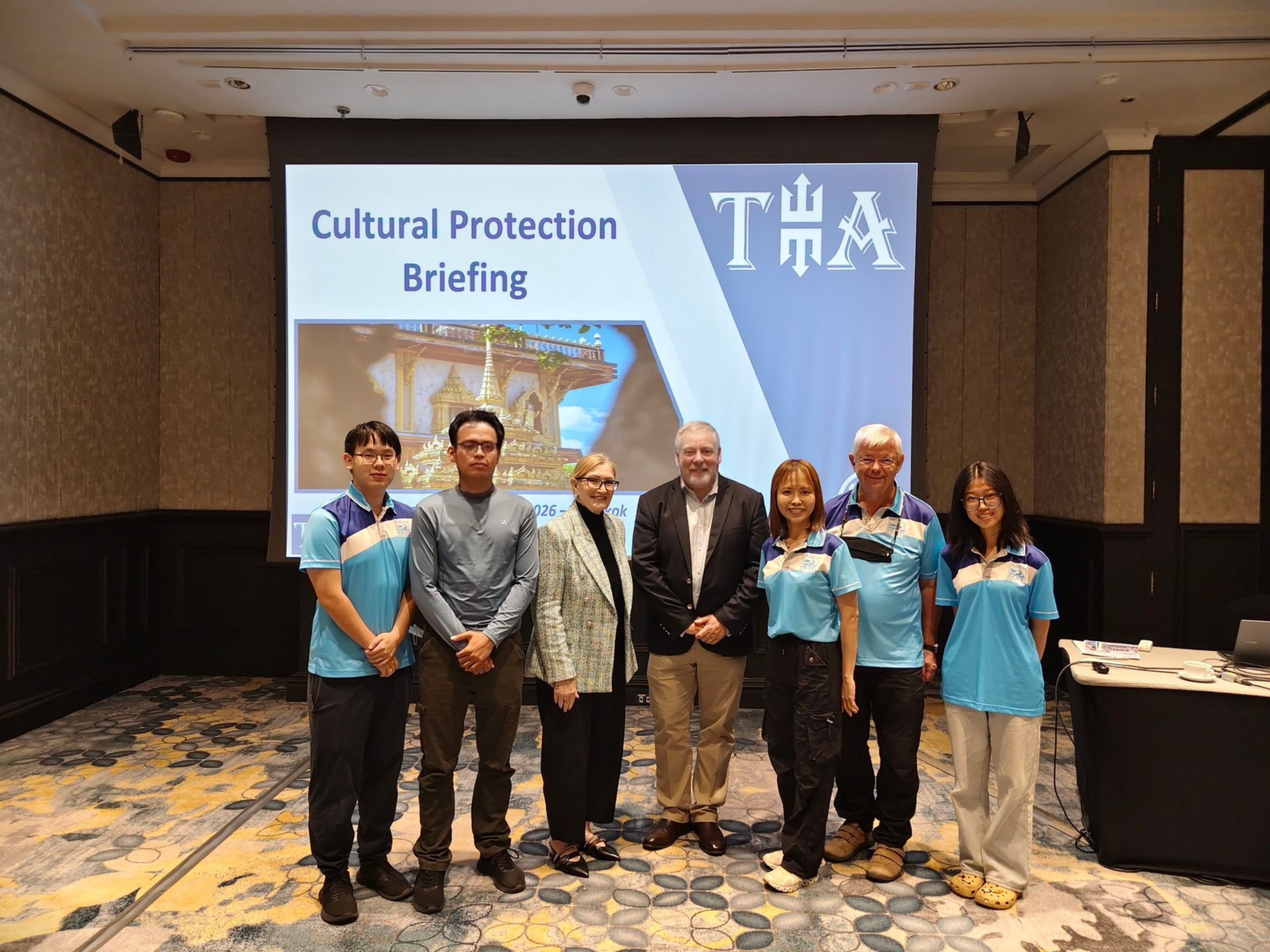
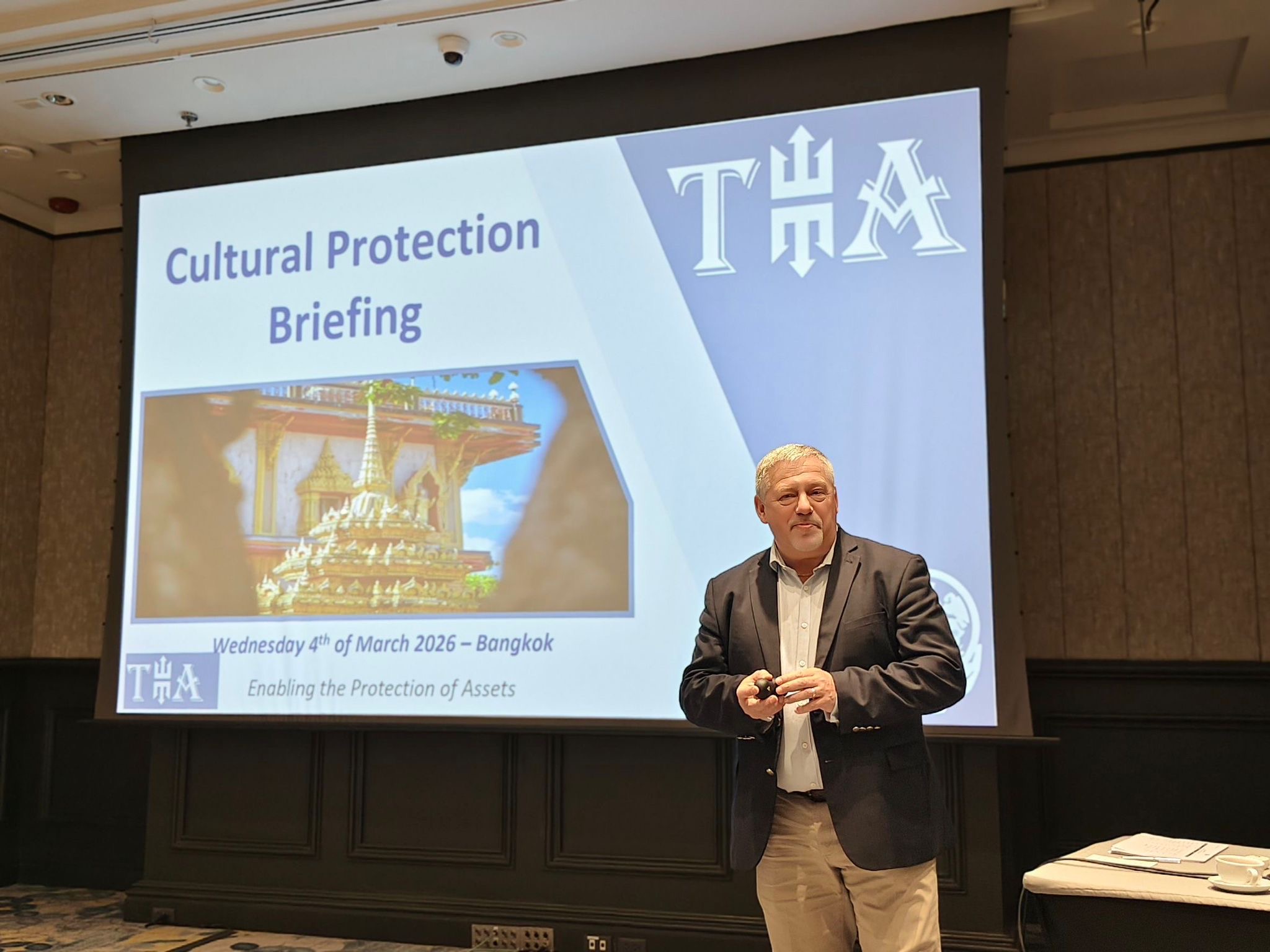
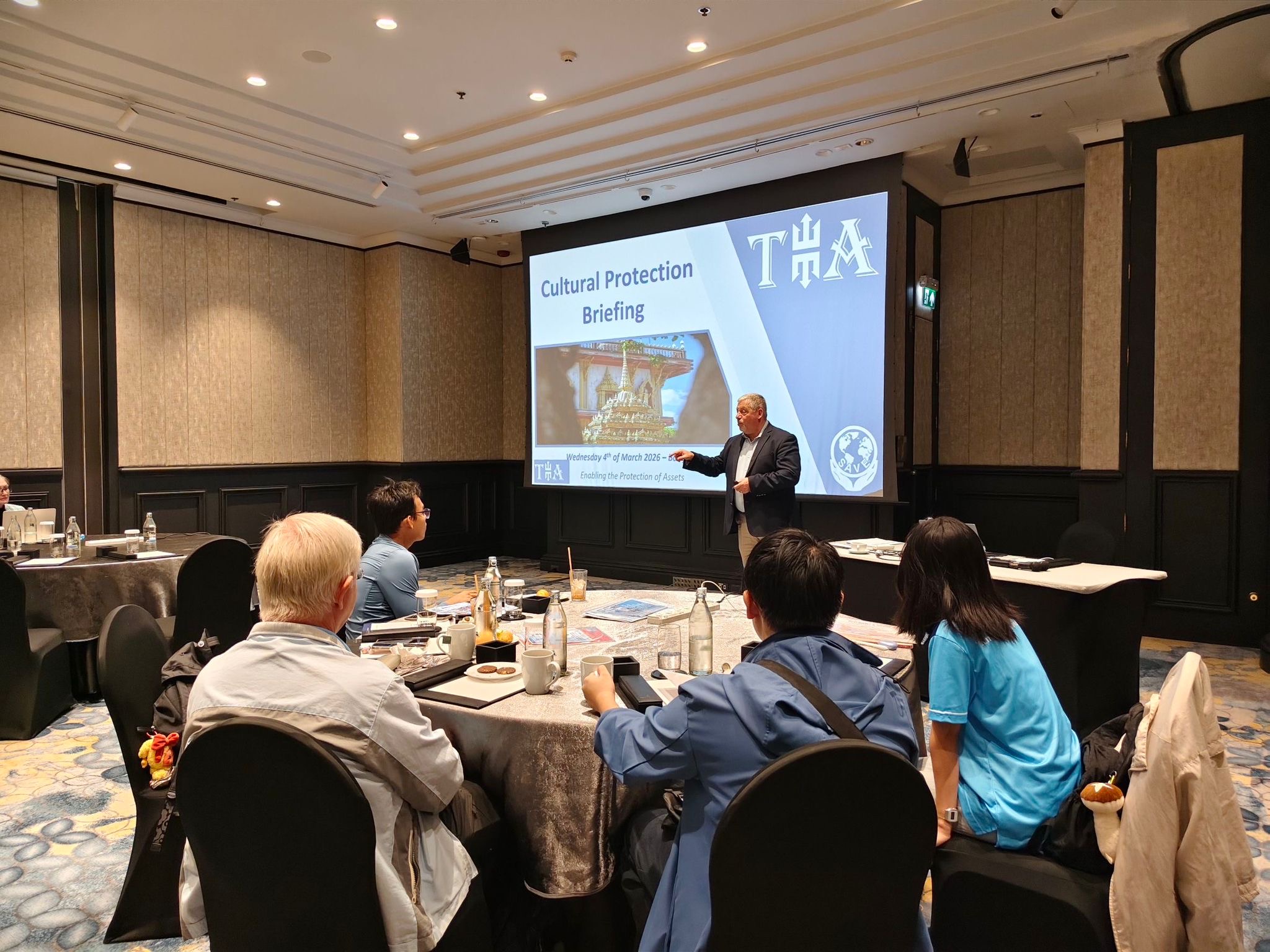
The HDFF team participated in a two-day intensive training in Bangkok, hosted by Trident Manor, focusing on an essential but often overlooked aspect of human security: the protection of our cultural heritage.
On March 4th, our team attended the ‘Cultural Protection Briefing’, followed by the ‘Introduction to the Protection of Cultural Venues’ on March 5th. Led by globally recognized expert Andy Davis, these sessions allowed us to look at heritage sites such as museums and ancient monuments from a new perspective.
The Threats
Cultural heritage is broad. It includes both tangible artifacts and intangible traditions like language, dance, and music. However, these assets face various types of threats such as:
- General Threats: Environmental factors, bureaucratic bottlenecks, disease outbreaks (e.g., COVID-19), and the ongoing armed conflicts around the world.
- Specific Threats: Flooding, logistical challenges, structural damage, and unauthorized excavations.
- Adversarial Threats: The most complex risks often come from human actors, including insiders, organized crime, and ideologically motivated groups that use destruction or theft to gain global media attention or funds.
Defense Actions
One of the key takeaways from the training was the importance of adopting the attackers’ perspective by understanding the Attack Cycle that includes target selection, planning, attack, escape, and exploitation.
Effective operations require more than just doors, locks and security guards. They include:
- Suitable governance: clearly defined roles and responsibilities.
- Auditable processes: developing emergency response plans and reporting structures.
- Continuous education: training at all levels, and etc.
This training supports our commitment to the “Knowledge Improves Life” motto. Integrating these security protocols into our work ensures that we can better advise our partners on protecting not just physical safety, but the history that define the communities we serve.
We would like to thank Trident Manor and Andy Davis for their expertise and for their contribution to regional security through their training programs.
Comments are closed