
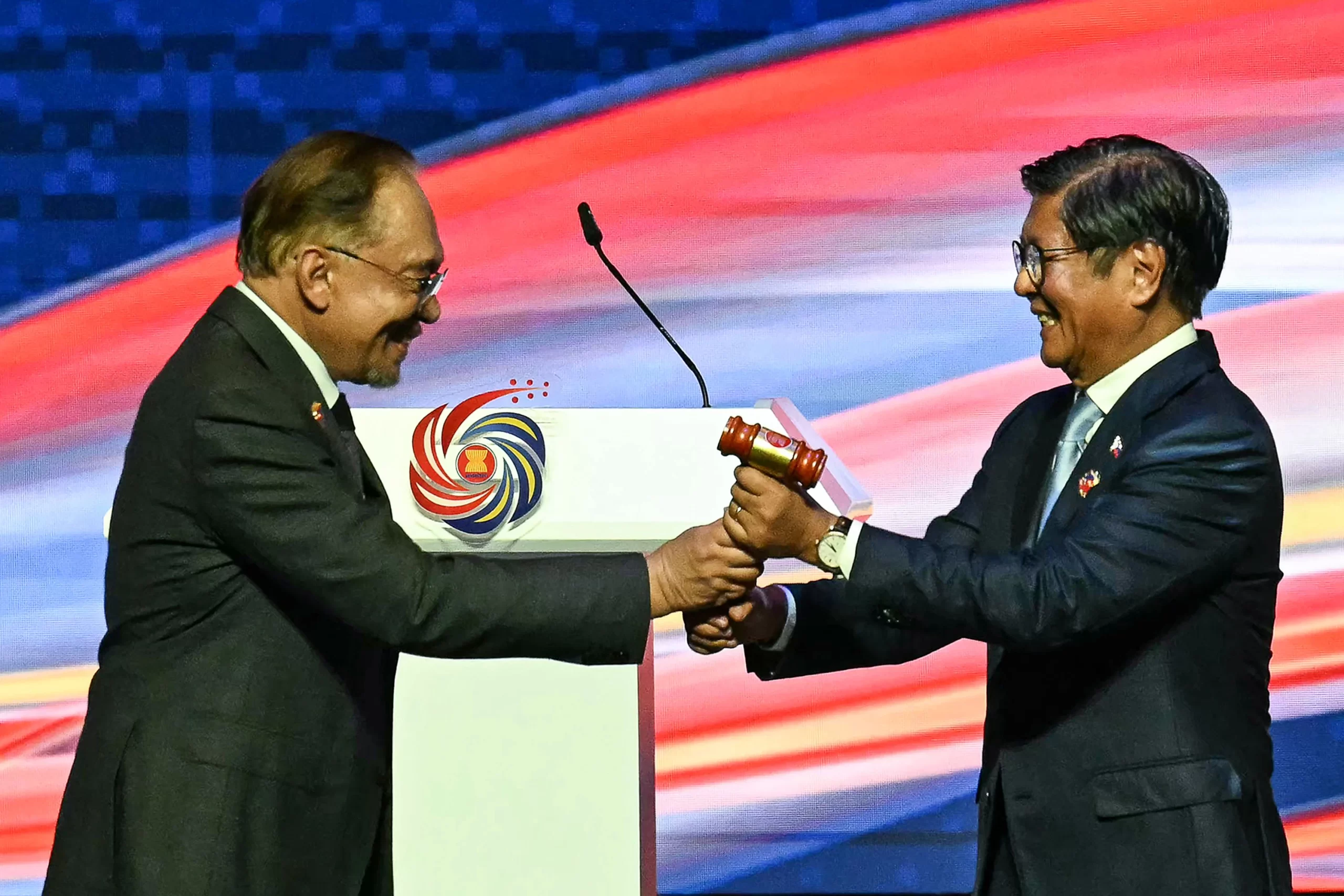
In 2023, Indonesia pushed for the Code of Conduct (COC) in the South China Sea to be finalized by 2026, and now that the year has arrived and the ASEAN chairmanship has changed to the Philippines, the new chair has made it a priority to facilitate the completion of the COC (ISEAS-Yusof Ishak Institute, 2025). There is optimism about its completion due to the premise that the Philippines will continue negotiations after years of a stalemate (Pedrajas, 2026). However, there is also skepticism as to whether the COC will be successfully finalized. This can be attributed to three primary factors, namely the historical distrust between the Philippines and China, the deviation between the interests of the claimant states and China, and the internal fragmentation of ASEAN. These factors are discussed, situated within the context of the South China Sea and its geographical, military, and economic importance.
Background
The history of the conflicts within the South China Sea is complex, with a number of opposing claims. China claims approximately 80 percent of the sea due to its nine-dash line, while other claimants, namely Vietnam, the Philippines, Malaysia, and Brunei, view this as an infringement of their sovereignty and reject China’s territorial claims that are not supported by the United Nations Convention on the Law of the Sea (UNCLOS).
Due to these conflicting claims, the Declaration on the Conduct of Parties in the South China Sea (DOC) was developed in 2002 as a means of promoting peace and stability within the maritime space and is meant to be the foundation for the development of the Code of Conduct (COC) in the South China Sea. This declaration was made in response to China’s aggressive military claims to significant areas in the South China Sea. These were the Paracel Islands, the Scarborough Shoal, and the Spratly Islands.
China’s aggressive maritime activities began in the 1970s. In 1974, China took control of the Paracel Islands, leading to the death of more than 65 Vietnamese soldiers. Following this, China claimed Johnson Reef and Mischief Reef, parts of the Spratly Islands, from Vietnam and the Philippines in 1988 and 1995, respectively (Kenny, 2024).
Now, in the 21st century, China has increased its military presence in the South China Sea, constructing naval bases and airstrips on its features, further asserting its dominance in the region. Before the militarization of the features, however, China’s activities in areas in the South China Sea overlapping with the Philippines’ Exclusive Economic Zone caused the country to file a case against China with the Permanent Court of Arbitration (PCA). The ruling of the South China Sea Arbitration, as the case was called, was in favor of the Philippines, as the PCA claimed that the nine-dash line had no legal basis with regard to the UNCLOS. In spite of this, China rejected the ruling and continued its maritime activity within the region, highlighting the limitations of international law.
Although this particular maritime arena has been replete with conflict, over two decades have passed since the development of the DOC, and a consensus has not been reached. The Philippines has situated the conclusion of the COC at the top of its agenda; however, whether it will succeed is dependent on a variety of factors.
Historical Conflict Between the Philippines and China
One of such factors is the distrust between the Philippines and China. Historically, the Philippines and China have had conflicts in the South China Sea, pertaining to the aforementioned Mischief Reef and the Second Thomas Shoal. These conflicts were characterized by seizures and aggressive maneuvers.
In the case of the seizure of Mischief Reef, China initially claimed that the reef was only being used as a shelter for its fishermen in response to accusations by a Filipino fisherman who reported that there were soldiers patrolling in the area, but now, it has been completely militarized with a “3,000-meter airfield runway, radar systems, and warehouses probably housing surface-to-air missile systems.” China’s maritime presence in the area is also substantial, as there have been reports of Chinese navy and coastguard vessels patrolling the area who are harassing Filipino troops through the utilization of “military-grade lasers and water cannons.” Additionally, they have been obstructing the businesses of Filipino fishermen by colliding with their boats and taking away their catches, further asserting China’s claim on the geographical feature (Rasheed, 2023). These actions have been committed, although according to UNCLOS, Mischief Reef is within the Philippines’ Exclusive Economic Zone (EEZ).
In the case of the Second Thomas Shoal, in an attempt to reinforce their claim over the feature, the Philippines grounded the BRP Sierra Madre, a tank landing ship, on it in 1999. This defined the subsequent conflicts, as it centered around attempts by China to disrupt missions conducted by the Philippines with the aim of resupplying the ship. These disruptions have occurred since 2021, causing damages to Filipino crew members and property. One noteworthy instance of this transpired in 2024 when, according to theAsia Maritime Transparency Initiative (2024), the China Coast Guard, the maritime militia, and the People’s Liberation Army Navy attacked a Philippine Navy inflatable boat and destroyed equipment with knives and axes. Once again, China exhibited a disregard for international law as the Second Thomas Shoal is also within the Philippines’ EEZ while it is not within China’s.
One may argue that China’s retaliation is of a warranted character due to the Philippines’ violation of the agreement made by ASEAN and China in 1997 before the development of the DOC that stated, “All relevant parties agreed to continue to exercise restraint and handle relevant differences in a calm and constructive manner.” It can be argued further that the Philippines’ continued grounding of the Sierra Madre violates the DOC agreement that pertained to “the restoration of the natural state of Second Thomas Shoal” (Xiangmiao, 2023). However, this still does not explain China’s aggressive claim over the shoal, as legally it is not within its EEZ.
In addition to China’s rejection of the South China Sea Arbitration Ruling in 2016, which brings into question whether China can be trusted to uphold the terms of a finalized COC, the history between the Philippines and China with regard to these two maritime features may make it challenging for the two countries to come to a consensus for the development of the COC due to declining trust.
This is apparent in the public remarks of the representatives of the Philippines. In 2024, President Ferdinand Marcos Jr. of the Philippines insinuated, without mentioning China by name, that the Philippines had attempted to reclaim its sovereignty in the South China Sea through internationally legal means while China had attempted to assert control in the area through aggressive and coercive means (Christensen, 2026). Moreover, Gilbert Teodoro, the Philippines’ defense secretary, explicitly stated that one of the primary factors preventing successful negotiations of the COC is the lack of trust the Philippines has for China (Espiritu, 2025).
On the other hand, as the Philippines has been widening its repertoire of alliances to increase its security and deter China’s encroachment, China has increasingly viewed this as a threat, especially with regard to the involvement of the United States. In previous negotiations of the COC, China has expressed its desire to keep third parties out of the region, and Chinese officials have claimed “external interference” to be a major factor that is causing tension between ASEAN and the country. Moreover, accusations pertaining to how the United States is using the Philippines as a proxy to provoke an escalation in the region were also made by Chinese officials after each attempt by the Philippines to strengthen security ties with the global power (Radio Free Asia, 2024).
Due to the acknowledgement that such a history may undermine any attempts by the Philippines, as ASEAN chair, to develop a functional COC with the cooperation of China, a Chatham House expert has suggested that the Philippines may need to forego the direct development of the COC and instead focus on building mutual trust between the ASEAN bloc and the country to facilitate future negotiations (Venkataramani, 2025).
Policy Deviations Between ASEAN and China
Aside from this distrust, there are also disagreements between the claimant states with regard to the terms and conditions of the COC. As implied in the prior section, one of these contentions pertains to China’s desire to prevent any external party from interfering in the affairs of the region. The provision, as proposed by the country, states, “The parties shall not hold joint military exercises with countries from outside the region, unless the parties concerned are notified beforehand and express no objection.” This is a demand that the claimant states object to.
In fact, in response to such a provision, Vietnam dissented and submitted its own provision, making it so the concerned parties must be notified 60 days in advance in the case of a joint-military exercise. From the perspective of ASEAN claimant states, external parties are necessary to prevent China from dominating the waters and to counterbalance their military influence. On the other hand, China’s proposal is reasonable in light of the notion that increasing external interference, particularly from the United States, may counteract its policies and may pose a security issue towards the country (Zhang, 2019).
Aside from this particular point of contention, there are other matters that are subjects of disagreements among the different claimants. These are the geographical scope of the COC, the legal status of the COC, and China’s desire for the resources in the South China Sea to remain within the region. Whether these contentions will be resolved remains to be seen.
With regard to the geographical scope, according to the ISEAS-Yusof Ishak Institute (2025), the division of the maritime space among the different claimants is complex and functionally challenging due to the limited amount of space. This means that overlaps are inevitable. As such, it may be challenging for the relevant states to decide on their Exclusive Economic Zones without making concessions. To further complicate matters, China and ASEAN states, particularly the Philippines and Vietnam, are in disagreement with regard to the maritime features in which the COC will be applicable. China wishes for the COC to only apply to regions it does not have complete control over, while the Philippines and Vietnam believe that it is imperative that the scope includes all disputed maritime features (Naval, 2024).
Furthermore, the legal status of the COC is currently in question. China hopes for a flexible non-binding code, while ASEAN wants the code to be legally binding (Kashyap, 2023). The rationale behind China’s stance is that a non-binding code will serve to develop norms, which can then be employed to increase cooperation between the parties. Meanwhile, ASEAN views a non-legal code as one that does not encourage compliance and may not be as effective to deter China from seizing more maritime features in the South China Sea.
The final contention of the COC pertains to China’s wish for the resources found in the South China Sea to remain within the region, suggesting that any partnership with foreign states outside of the region should be prohibited. In response, Malaysia counter-proposed a provision stating that the COC should not undermine the rights of the relevant states as dictated by international law.
These four contentious topics need to be thoroughly discussed among the relevant parties if a COC were to be fully implemented. It is apparent that concessions must be made among the parties, and such concessions may undermine the states’ national interests. Whether the involved parties would make such concessions is currently uncertain.
Internal Fragmentation of ASEAN
The final factor that may stall the completion of the COC is the lack of cohesion within the ASEAN bloc. Although the Philippines has claimed that attempts will be made to finalize the COC and has stressed the importance of the DOC, the different members of ASEAN have differing views on the matter, which can weaken the organization’s ability to collectively contribute to the code’s development (Gerale, 2026).
The claimant states in ASEAN, namely the Philippines, Vietnam, Malaysia, and Brunei, differ in their “political will” and “threat perception,” while non-claimant states tend to refrain from directly confronting China with regard to the COC due to their economic ties with the country (Lin and Sothirak, 2025). Trust within the ASEAN framework has also dwindled as claimant states such as the Philippines and Vietnam have formed alliances with other countries to enhance their security and protect their sovereignty in the South China Sea. Such actions indicate that the countries doubt the development of the COC.
In light of this fragmentation, it is necessary for the Philippines to enhance the cooperation within the organization to increase the collective leverage it has against China. However, this may be challenging, as the Thai-Cambodian border tension and the conflict in Myanmar have shown that ASEAN lacks collective power as the member states tend to have differing political views.
Conclusion
With more than two decades since the development of the DOC, the Philippines has decided to spearhead the finalization of the COC as ASEAN chair, but this comes with a myriad of obstacles. The history between the country and China, the disputed terms and conditions of the finalized document, and the fragmentation of ASEAN will be roadblocks that the country must overcome this year to meet the deadline as set by Indonesia. Whether agreements will be made remains to be seen; however, in light of past challenges, this seems unlikely without concessions from claimant states.
Bangkok, March 2026
References
Asia Maritime Transparency Initiative. (2024, August 22). Shifting tactics at second Thomas Shoal | Asia Maritime Transparency Initiative. Retrieved March 18, 2026, from https://amti.csis.org/shifting-tactics-at-second-thomas-shoal/#:~:text=Though%20tensions%20have%20been%20growing,on%20July%2027%20without%20incident.
Christensen, J. T., & Christensen, J. T. (2026, January 5). China and the Philippines: strained neighbourly relations and the Canadian connection. Open Canada. Retrieved March 18, 2026, from https://opencanada.org/china-and-the-philippines-strained-neighbourly-relations-and-the-canadian-connection/
Espiritu, R. (2025, June 3). Teodoro disengages from Chinese propaganda talk at SG forum. Manila Standard. https://manilastandard.net/news/314598066/teodoro-disengages-from-chinese-propaganda-talk-at-sg-forum.html
Gerale, C. P. (2026, February 1). The Problem With The South China Sea Code Of Conduct Is Not China: It’s ASEAN – Analysis. Eurasia Review. Retrieved March 18, 2026, from https://www.eurasiareview.com/01022026-the-problem-with-the-south-china-sea-code-of-conduct-is-not-china-its-asean-analysis/
ISEAS-Yusof Ishak Institute. (2025). The Elusive Code: Why ASEAN needs a new playbook for the South China Sea. No. 39, 1–5.
Kashyap, N. (2023, November 13). Assessing China’s claims in the South China Sea and East China Sea. Geopolitical Monitor. Retrieved March 18, 2026, from https://www.geopoliticalmonitor.com/assessing-chinas-claims-in-the-south-china-sea-and-east-china sea/#:~:text=This%20is%20because%20the%20ECS,resources%20to%20their%20fullest%20potential.
Kenny, M. (2024, December 25). territorial disputes in the South China Sea. Encyclopedia Britannica. https://www.britannica.com/topic/territorial-disputes-in-the-South-China-Sea
Lin, J., & Sothirak, P. (2025, July 13). The Elusive Code: Why ASEAN needs a new playbook for the South China Sea | FULCRUM. FULCRUM. Retrieved March 18, 2026, from https://fulcrum.sg/the-elusive-code-why-asean-needs-a-new-playbook-for-the-south-china-sea/
Naval, J. (2024, November 21). ASEAN’s elusive code of conduct for the South China Sea. East Asia Forum. Retrieved March 18, 2026, from https://eastasiaforum.org/2024/11/21/aseans-elusive-code-of-conduct-for-the-south-china-sea/
Pedrajas, J. (2026, March 11). PH vows to keep South China Sea “a sea of peace and stability.” Manila Bulletin. Retrieved March 18, 2026, from https://mb.com.ph/2026/03/11/ph-vows-to-keep-south-china-sea-a-sea-of-peace-and-stability
Radio Free Asia. (2025, June 4). China, ASEAN unlikely to achieve Code of Conduct in 2024: experts. Radio Free Asia. https://www.rfa.org/english/news/southchinasea/code-of-coknduct-02072024014051.html
Rasheed, Z. (2023, December 30). How an impasse in the South China Sea drove the Philippines, US closer. Al Jazeera. https://www.aljazeera.com/news/2023/12/30/how-an-impasse-in-the-south-china-sea-drove-the-philippines-us-closer
Venkataramani, B. (2025, December 9). With the Philippines as ASEAN chair, a South China Sea agreement is unlikely to be concluded in 2026. Chatham House. https://www.chathamhouse.org/2025/12/philippines-asean-chair-south-china-sea-agreement-unlikely-be-concluded-2026
Xiangmiao, C. (2023, September 16). History and Reality of Entanglement between China and the Philippines. 南海战略态势感知计划. Retrieved March 18, 2026, from https://www.scspi.org/en/dtfx/history-and-reality-entanglement-between-china-and-philippines-second-thomas-shoal#:~:text=Santos%2C%20suggested%20that%20World%20War,Philippines’%20%E2%80%9Cagound%20strategy%E2%80%9D.
Zhang, F. (2019). China’s approaches to the South China Sea Code of Conduct negotiation. Retrieved March 18, 2026, from https://openresearch-repository.anu.edu.au/items/aeaf28b9-648f-47e8-bc0b-2d39cefaf857
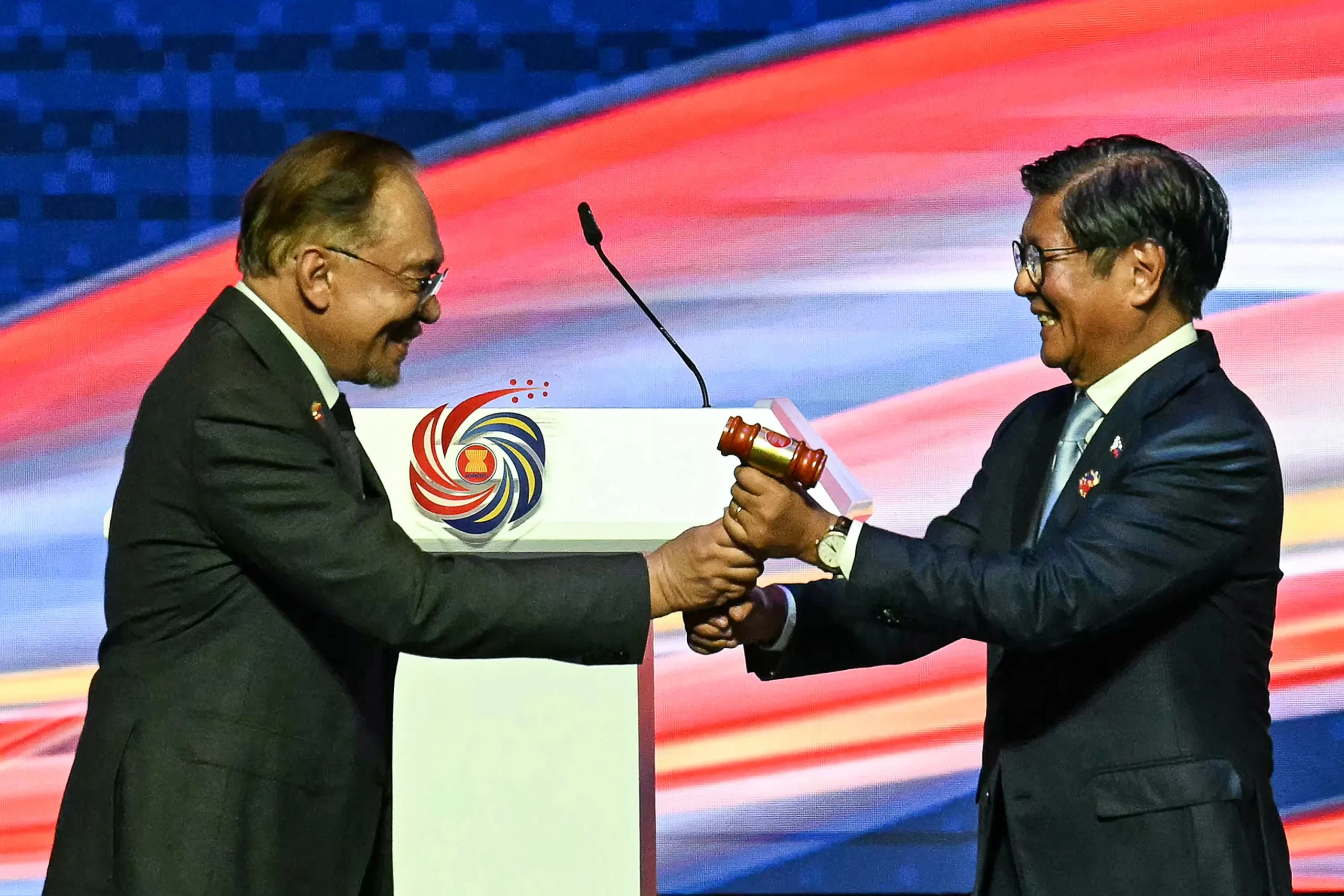
All image credit goes to ABS-CBN
Comments are closed