
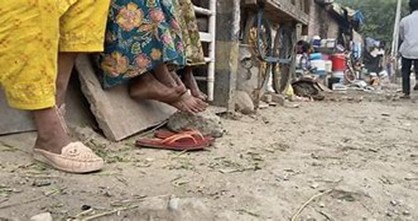
The Rohingya people of Myanmar remain one of the largest populations in urgent need of resettlement in 2026. Often described by experts and human rights organizations as the most persecuted people on Earth, the Rohingya are a Muslim minority who have lived in what is now Rakhine State in Myanmar for centuries. However, the Myanmar government refuses to recognize their historical presence, instead labeling them as illegal immigrants from Bangladesh. When Myanmar completed a census in 2014, the Rohingya were denied to be recognized for the census. Rakhine State, Myanmar’s poorest region, is marked by ongoing violence, much of it inflicted by the ruling military junta. Despite the scale of the humanitarian crisis, the safe return or long-term resettlement of the Rohingya remains a low priority for both Myanmar’s authorities and the international community. While the military regime is widely known for its hostility toward the Rohingya, they also face hatred from some ethnic armed groups, including the Arakan Army (AA), a powerful ethnic Rakhine insurgent group that opposes the junta and operates across Rakhine. Though the AA claims to fight for the rights of the Rakhine people, which would include the Rohingya, it has banned the use of the term “Rohingya” in areas under its control and refers to them only as “Bengalis.” As a predominantly Buddhist group, the AA has been accused of marginalizing and persecuting Rohingya communities, reflecting in the long history of ethnic and religious divisions within the state.
History
Arab traders began arriving in the region now known as Myanmar over a thousand years ago, bringing with them their religion and customs. Many of them settled in what is today Rakhine State, laying the foundations for the Rohingya community, which has lived in the area for centuries. During World War II, while many ethnic Burmese sided with the Japanese, the Rohingya aligned themselves with the British forces. In return, the British reportedly promised them their own state. However, after the war, this promise was never fulfilled. Following Myanmar’s independence, the new government viewed the Rohingya with suspicion, seeing them as loyal to colonial powers. This fueled deep-seated resentment and laid the groundwork for decades of marginalization. When Myanmar drafted its constitution after gaining independence, the Rohingya were excluded from official recognition and denied basic rights. Today, they remain one of the largest stateless populations in the world.
Over the years, the Rohingya people have endured severe persecution and widespread hatred in Myanmar. Their distinct physical appearance and their Muslim faith, in contrast to the majority Buddhist population, have made them a highly visible ethnic group. These differences have fueled deep-rooted racism and discrimination, forming the basis of the systemic exclusion and violence they continue to face. For many years, the Rohingya people have been fleeing Myanmar. The violence has been getting worse and more rampant for years. The Arkan Rohingya Salvation Army (ARSA) launched an attack on the military in 2017. The Rohingya militia killed at least twenty police officers and border personnel. Because of this attack in the Rakhine state, an ethnic cleansing took place against the Rohingya people that has not slowed down. Their villages where burned to the ground, many where murdered and raped, and families where seperated. Many thousands of Rohingya people fled the violence to Bangladesh and other nearby countries. The violence, murders, and persecution has not stopped in Myanmar. The Rohingya in Myanmar are under great threats and many are still trying to escape to nearby countries. They hope and seek refuge and are met with harsh realities and hardships.
Arkan Rohingya Salvation Army
Due to the severe persecution the Rohingya have faced in Myanmar, especially by the military junta and some ethnic armed groups, a group of Rohingya created the armed militia and named it the Arakan Rohingya Salvation Army (ARSA). ARSA claims its mission is to protect and defend the Rohingya people. However, the Myanmar government has labeled ARSA a terrorist organization, accusing it of seeking to establish an Islamic state in the country. ARSA denies this designation, stating that it does not target innocent civilians. Some have alleged links between ARSA and international terrorist groups such as Al-Qaeda and ISIS. The group reportedly began with Rohingya men who had received training abroad, including in Saudi Arabia and Pakistan. Many Rohingya men have left refugee camps in Bangladesh to return to Myanmar and join the fight for ARSA.
Motivated by a desire to resist what they saw as the ethnic cleansing of their people, some crossed back into Myanmar and recruited local Rohingya to support their cause. The leader of ARSA is Ata Ullah, also known as Abu Ammar Jununi. He was born in Pakistan to Rohingya refugees who fled Myanmar in the 1960s. As an adult, Ata Ullah moved to Saudi Arabia, where he gained influence among Rohingya communities, particularly within religious circles. Determined to reclaim Rakhine State for his people, he became known for his charismatic and persuasive efforts to recruit Rohingya men to fight in Myanmar.
In 2017, following attacks on security posts in Rakhine State, which ARSA claimed responsibility for, the Myanmar military launched a brutal crackdown that led to widespread genocide. Ata Ullah appeared in a video at the time, openly taking responsibility for the attacks and asserting ARSA’s legitimacy. The group has since argued that it has a right to defend the Rohingya community after decades of systemic violence and discrimination. However, over time, ARSA has been increasingly accused of engaging in criminal activities that go far beyond self-defense. These include killings, human trafficking, weapons smuggling, forced recruitment, torture, and abductions. Reports from refugee camps in Bangladesh indicate that ARSA has used threats and violence to force both young and elderly Rohingya into joining their ranks. The group is also accused of targeting and intimidating those who disagree with its ideology or resist its control, contributing to a climate of fear and instability within the camps. ARSA is believed to oppose any reconciliation or reparations process with the Myanmar government and has reportedly acted against Rohingya individuals seeking peaceful solutions.
Additionally, tensions have escalated between ARSA and other armed groups and criminal networks operating in the region, further destabilizing the camps. In early 2025, Ata Ullah was reportedly arrested by Bangladeshi authorities. He is currently facing charges related to war crimes, including the alleged killing, abuse, and abduction of Rohingya refugees within camps. In a surprising development, ARSA is now reportedly cooperating with the very military junta that has long oppressed the Rohingya. This unexpected alliance has caused many, particularly within the Rohingya community, to question ARSA’s true motives and loyalty.
Neighboring Countries Response to the Rohingya Crisis
Bangladesh
The Rohingya people fled ethnic cleansing in Myanmar and sought refuge in neighboring Bangladesh. In response to the crisis, Bangladesh placed the refugees in camps in Cox’s Bazar, a coastal town in the south of the country. One of these camps, Kutupalong, has become the largest and most densely populated refugee camp in the world. The vast majority of people living in these overcrowded and inadequate conditions are Rohingya. Refugees in the camps are not permitted to work or leave, leaving many families in extreme desperation. As a result, some sell their daughters into human trafficking networks, where they face forced labor, sexual exploitation, or early marriage. Cox’s Bazar has become one of the largest hotspots in the world for the trafficking of women and girls.
Armed groups, including the Arakan Rohingya Salvation Army (ARSA) and the Rohingya Solidarity Organization (RSO), have taken control of parts of the camps, spreading fear and violence. These groups have been linked to killings, intimidation, and widespread unrest. Despite this, authorities have been criticized for underreporting the scale of the violence and failing to take meaningful action. It’s estimated that at least 11 armed groups are now active in the region. Bangladeshi authorities have lost control over large portions of Cox’s Bazar, and camp security forces often fail to intervene when violence breaks out. Human rights violations continue to occur regularly, yet official responses remain minimal or absent.
Despite Bangladesh’s efforts, the camps in Cox’s Bazar lack sufficient resources to meet the needs of the growing refugee population. Recent major cuts to foreign aid have made the situation even more dire, reducing the already limited supplies available to the Rohingya refugees. Although there have been many recent cuts to foreign aid from the United States, the US is still the largest financial supporter of Rohingya refugees in Bangladesh. The United Nations High Commissioner for Refugees (UNHCR) has played a central role in supporting the Rohingya, working in partnership with the government of Bangladesh and various humanitarian organizations to provide shelter, food, healthcare, and education.
However, Bangladesh’s capacity is limited, and the long-term presence of such a large refugee population has placed immense strain on the country’s economy, environment, and infrastructure. International support remains crucial, but declining donor interest and funding shortfalls continue to threaten the sustainability of the humanitarian response. Bangladeshi citizens are growing increasingly weary of the ongoing influx of Rohingya refugees into the country. Many express concern about the long-term impact on national resources, rising violence, and ongoing tensions along the border with Myanmar. There is a growing sense of insecurity among locals, who feel that the large refugee population is putting immense pressure on their country. Some believe that refugees are receiving more aid than local communities and blame them for straining public services and resources. Environmental degradation has also become a concern, as the sudden population growth has led to increased pollution and deforestation. In certain areas, such as Cox’s Bazar, Rohingya refugees now outnumber the local population, leading to inflated prices of basic goods and intensified job competition. As the crisis continues with no clear resolution in sight, frustration among Bangladeshis is mounting and many question how much longer the country can bear this burden.
India
India does not take a kind approach to Rohingya refugees. In May 2025, it was reported that India detained around 40 Rohingya refugees. Police officers unlawfully held them without access to basic human needs for two days. Reports also stated that the officers physically assaulted the refugees. The 40 Rohingyas were blindfolded, tied up, and flown to a nearby port, where they were forced to board a ship. The ship took them to the coast of Myanmar, where all of them were thrown into the ocean. Reports suggested they remained in the water for over ten hours until they reached the shore and were found by fishermen. This is just one example of violations of human rights that India has against the Rohingya refugees. With ongoing unrest between India and Pakistan, India has treated Muslims unfairly across the nation, including the Rohingyas. India’s approach toward the Rohingya has been harsh, influenced in part by their Muslim identity.
Thailand
To escape persecution and discrimination, many Rohingya pay smugglers to help them reach Thailand. These smugglers often beat and abuse the Rohingya during the journey. The refugees are frequently crammed into vans with little oxygen and hardly any space to move. In some cases, Rohingya have been found in Thailand in critical condition, and some have even died as a result of the dangerous journey. Humanitarian organizations have called on Thai authorities to take stronger action in response to the Rohingya crisis. They urge the government to investigate the smugglers and address the human trafficking networks that exploit Rohingya refugees. Many Rohingya flee Myanmar or the overcrowded refugee camps in Bangladesh by boat, attempting to reach countries like Thailand. The journey is extremely dangerous, and many refugees drown in rough waters. By the time they reach Thai shores, many are close to death due to a lack of food, clean water, and other basic needs. In the past, Thailand has denied entry to Rohingya boats, pushing them back out to sea. The Thai government views the Rohingya as illegal immigrants. When they do arrive, they are often detained in poor conditions for extended periods and later sent to temporary shelters or refugee camps, where they are not allowed to work or move freely.
Indonesia and Malaysia
Indonesia and Malaysia are both predominantly Muslim countries in Southeast Asia. Many Rohingya refugees travel by boat to these nations from Myanmar, Bangladesh, India, and Thailand, often risking their lives in the process. Desperate to escape harsh conditions, Rohingya families pay large sums to smugglers in hopes of reaching Indonesia or Malaysia. In some cases, men leave their families behind in camps like Cox’s Bazar to find work abroad and send money home.
Despite the dangers, many Rohingya choose to flee to Indonesia and Malaysia because they believe the Muslim-majority populations in these countries will be more accepting. Upon arrival in Indonesia, refugees are first held in detention centers before being moved to camps. However, access to international aid is limited, and basic needs often go unmet. In particular, healthcare is a major concern in Indonesia, where many refugees suffer serious illnesses or even die due to a lack of proper medical care. As a result, some Rohingya attempt to move on to Malaysia in search of a better life.
Malaysia hosts the second-largest population of Rohingya refugees. Many choose to go there because it is easier to blend into society and find informal work. Unlike Indonesia, Malaysia does not have an official refugee recognition system, which allows many Rohingya to live and work “off the record.” However, this does not mean life is easy. Refugees still face poor living conditions, instability, and limited access to services. Over time, public sentiment in Malaysia, much like in Bangladesh, has turned increasingly hostile toward the Rohingya population. Locals are growing frustrated, accusing refugees of taking jobs and straining the economy. Many feel that the continued influx of refugees weakens their society.
Despite sharing a common faith with the Rohingya, both Indonesia and Malaysia remain hesitant to fully integrate them or offer long-term resettlement. Refugees remain in limbo, caught between unsafe conditions at home and uncertain futures abroad.
The Future
The nations closest to the Rohingya crisis have shown little willingness to fully integrate the Rohingya people into their societies. While Bangladesh continues to engage in discussions with Myanmar about the future of the Rohingya, a long-term solution remains unclear. Bangladesh has always had a mindset that the Rohingya must go back to their home country. The Bangladesh government has been in negotiation for years with Myanmar with little progress. ARSA claims to protect the Rohingya people, but is allied with the junta. No country is holding Myanmar responsible for the ethnic cleansing of the Rohingya. What does the future hold for the Rohingya? Many Rohingya refugees continue to express a desire to return to their homeland in Rakhine State, Myanmar, but only if their safety, citizenship, and rights are guaranteed. Although Myanmar authorities have hinted at the possibility of returning some Rohingya currently living in camps like Cox’s Bazar, the process is full of uncertainty. Given the Rohingya’s history of persecution and the military junta’s ongoing human rights abuses, trust in any promises from the regime remains deeply compromised. Meanwhile, Western countries such as the United States have shown a declining level of engagement in the crisis. In contrast, China has become more actively involved, positioning itself as a key negotiator in discussions over the future of the Rohingya people. This shift in international influence raises questions about what kind of solution, if any, will emerge, and whose interests it will ultimately serve.
Sources
UNHCR Projected Global Resettlement Needs 2026 – World | ReliefWeb (24 June 2025)
Refugee Camp Cox’s Bazar – Bangladesh | Malteser-International (2025)
Global Watch | How Not To Deal With The Rohingya Issue: Lessons From Bangladesh | Opinion News – News18 (27 June 2025)
India allegedly deported 40 Rohingya refugees by forcing them into Andaman Sea (16 May 2025)
2113 Coup Watch 27 Jun.pdf – Google Drive (27 June 2025)
The Rohingya people—facts and information | National Geographic (9 February 2019)
India: Stop unlawful deportations and protect Rohingya refugees – Amnesty International Australia (20 June 2025)
World must act to end the violence against Rohingya in Myanmar (11 September 2017)
Burma/Bangladesh: Burmese Refugees In Bangladesh – Historical Background
What Is Arakan? Territory, Historical Geography and the Ethno-National Dissent in Myanmar’s Rakhine State (20 February 2025)
Rohingya repatriation at a crossroads – Asia News NetworkAsia News Network (30 June 2025)
A Bleak Future for Rohingya Refugees – The Diplomat (14 March 2025)
Rohingya Refugee Crisis Explained (22 August 2024)
Why Myanmar Hates the Rohingya – Newsweek (31 January 2018)
Myanmar Rohingya: What you need to know about the crisis (23 January 2020)
Myanmar: Who are the Arakan Rohingya Salvation Army? (6 September 2017)
Arakan Army’s growing influence in Myanmar: Implications for the Rohingyas (24 January 2025)
ARSA: Who are the Arakan Rohingya Salvation Army? | Rohingya News | Al Jazeera (13 September 2017)
The Rohingya armed groups and a failed revolution – DVB (24 June 2024)
Thailand: Rohingya Found Dead During Escape from Myanmar | Human Rights Watch (18 October 2024)
‘We die or they die’: Rohingya insurgency sparks fresh violence in Myanmar | Rohingya | The Guardian (3 September 2017)
EXPLAINED: Arrested ARSA leader blamed for violence against Rohingya refugees – Radio Free Asia (23 March 2025)
Report: Rohingya militant groups kill, torture community’s refugees in Bangladesh – Benar News (18 March 2025)
Eyewitness Gives Chilling Account of Rohingya Leader’s Killing in Bangladesh – Benar News (4 October 2021)
Who is Ata Ullah – the man at the heart of the Myanmar conflict? (20 October 2017)
Who Are the Arakan Rohingya Salvation Army? — Radio Free Asia (1 September 2017)
Girls Sold into Forced Labour Largest Group of Trafficking Victims Identified by IOM in Bangladesh Refugee Camps | International Organization for Migration (16 October 2018)
Bangladesh: Spiraling Violence Against Rohingya Refugees | Human Rights Watch (13 July 2023)
sr-519_conflict-dynamics-bangladeshi-host-communities-rohingya-refugees.pdf (April 2023)
The Rohingya Migration to Indonesia: A comprehensive examination of causes, challenges, and solutions (21 March 2024)
2 Rohingya Refugees Die in Indonesia Amid Global Funding Crunch – The Diplomat (17 April 2025)
Thousands of Rohingya find refuge under Malaysia’s informal refugee policy (20 March 2025)
Comments are closed