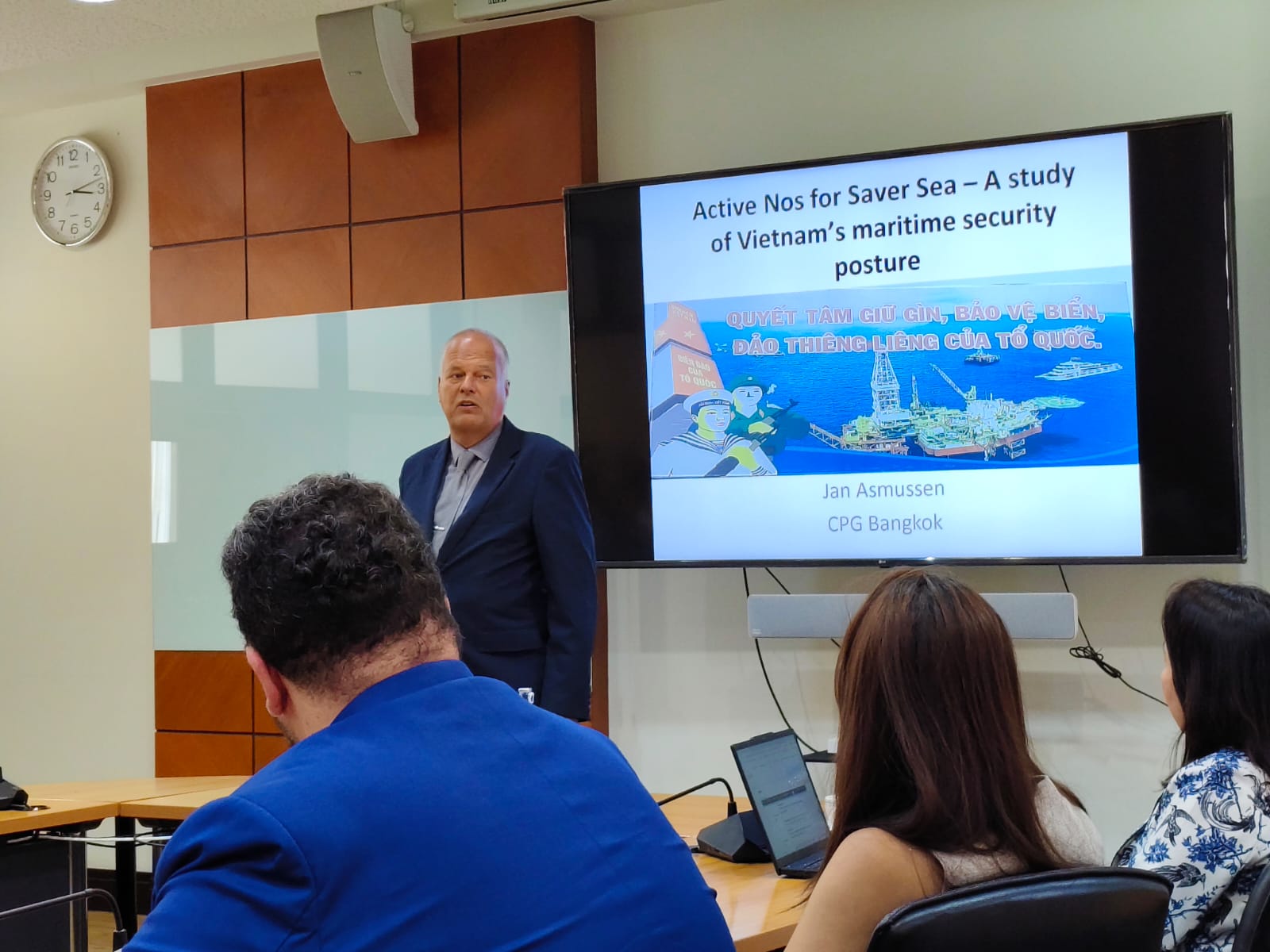
On the 25th of February 2026, a HDFF team attended a seminar titled “Two Seas, One Strategic Arena: Geopolitics in the Indo-Pacific” that was hosted by the German-Southeast Asian Center of Excellence for Public Policy and Good Governance (CPG).
The seminar featured His Excellency Dr. Warawit Kanithasen, the former ambassador of Thailand and a senior research fellow at CPG; Dr. Jan Asmussen, a senior research fellow at CPG and a political scientist; and Mr. Henning Glaser, the director of CPG.
Culminating in an all-encompassing body of knowledge with regard to the current geopolitical situation in the Indo-Pacific, the seminar was composed of the following three sessions:
- His Excellency, Dr. Kanithasen’s Keynote Speech
- Dr. Jan Asmussen’s Presentation on the Geopolitical Views of Vietnam
- Mr. Henning Glaser’s General Presentation on the Indo-Pacific’s Geopolitics
His Excellency, Dr. Kanithasen’s Keynote Speech
H.E. Dr. Kanithasen opened the seminar with an influential anecdote elaborating on the differences between international law and domestic law. During his time as a professor at Thammasat University, students would tell him that international law leaned more towards politics compared to law, arguing that it is largely different from domestic law.
In response to this assertion by his students, he provided them with a work that was written by Hans Kelsen, a political philosopher who is well-known for his theory of law, which he dubbed the “Pure Theory of Law,” and his written works on international law. According to H.E. Dr. Kanithasen, Hans Kelsen believed that international law is indeed law, but it is a primitive version of the legal construct. This is because the world does not have a universal police force and a universal government, and even though the World Court exists, it functions in a different manner from domestic courts.
H.E. Dr. Kanithasen linked this to the politics and legality of the sea by underscoring its importance through the mention of its broad coverage and via examples of political assertions of territory, such as the cannon-shot rule that states that the sovereignty of a country extends from the coast towards the sea depending on the range of their cannons and the belief of Hugo Grotius, a Dutch jurist, who said that the sea should belong to nobody.
Most noteworthy was the mention of the conflict between the Philippines and China with regard to the nine-dash line. The nine-dash line gave China control over the majority of the South China Sea, making it a threat to the sovereignty of the Philippines. Although the Philippines won the “South China Sea Arbitration” case in 2016 due to the ruling of the Permanent Court of Arbitration in the Hague, as the nine-dash line was seen as having no legal basis in accordance with international law, China has continued its maritime activity in the area.
Due to China’s rising economic and naval power in the area, this case brings into question whether the law of the sea will stay stagnant or it will evolve into one that favors countries with the highest military capacity.
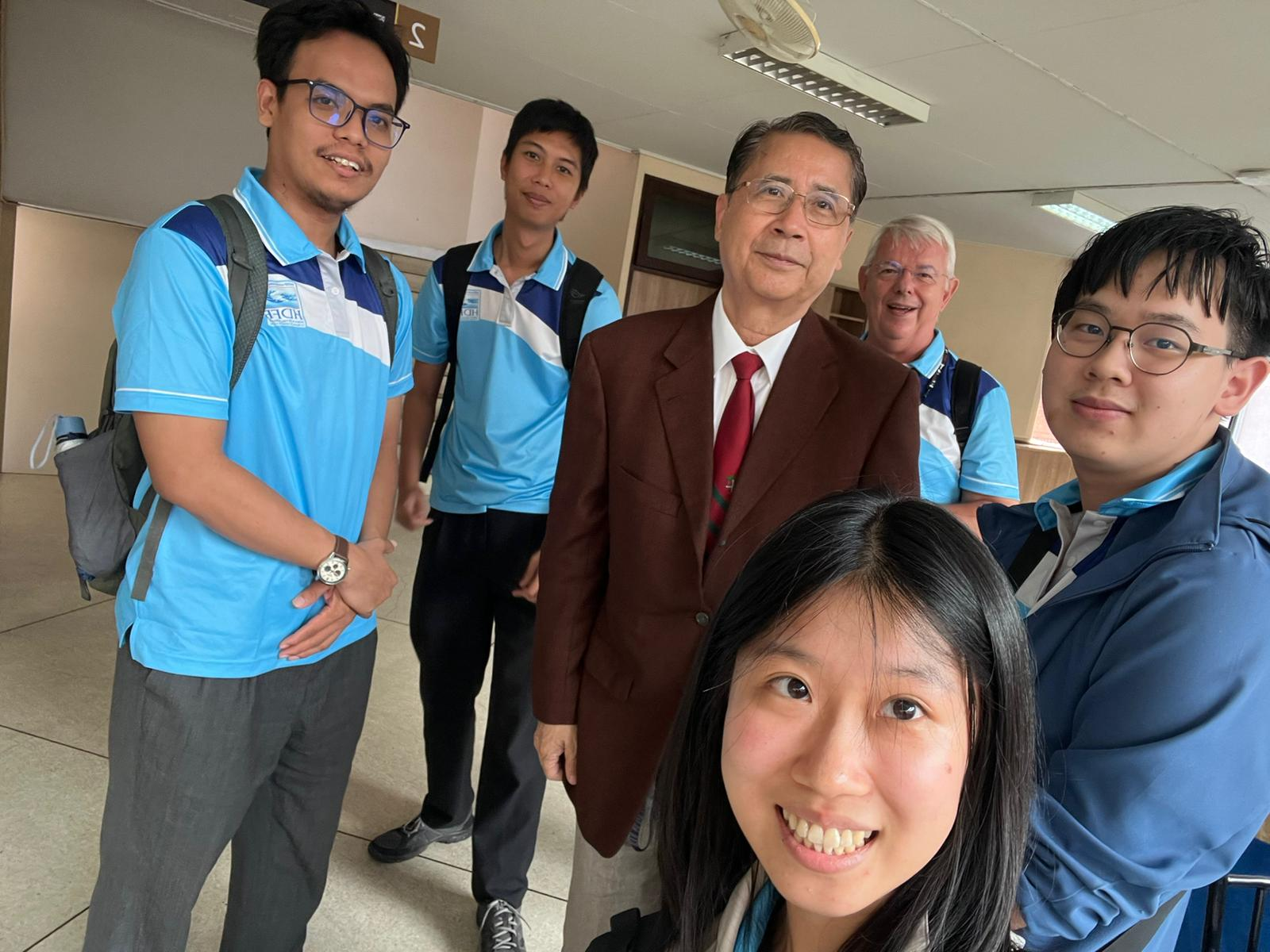
An Image of a HDFF Team With H.E. Dr. Kanithasen After the Event
Dr. Jan Asmussen’s Presentation on the Geopolitical Views of Vietnam.
Dr. Jan Asmussen did research on the geopolitical views of scholars in Vietnam and got insightful results. However, before unveiling his qualitative study on the threat perception and security of Vietnam, he started his presentation with a brief detail of Vietnam’s geopolitical stance, characterized by its “4 Nos” policy. The “4 Nos” policy indicates that (1) no partaking in military alliances is permitted, (2) no foreign military bases shall be in Vietnam, (3) no siding with one country against another and (4) no use of force or threat of force shall be permitted in international relations. This policy is rooted in strategic autonomy, allowing Vietnam to avoid being drawn into geopolitical tensions.
Aside from the 4 Nos policy, Vietnam is also trying to diversify partnerships rather than military alliances to achieve self-reliance, as currently, the navy is relying heavily on Russia for imports. Due to the ongoing Russia-Ukraine war, if unforeseen developments occur, Vietnam will suffer a loss.
Supplementing available information on Vietnam’s geopolitical policies, scholars and politicians were interviewed by Dr. Asmussen to better understand the country’s threat perception and security.
Dr. Asmussen found that China was regarded as Vietnam’s biggest threat. Due to this perception, some of the scholars believe that partnering with the United States is a possibility due to their antagonism against China, while others claim that partnering with the US can pose a risk due to its hegemonic tendencies and Vietnam’s official neutral stance. Japan, India, South Korea, Australia, and the Philippines were also mentioned as potential partners, while ASEAN is seen as unreliable and largely symbolic. Even though India was mentioned as a possible partner, skepticism of its reliability also emerged.
Pertaining to a possible war between Taiwan and China, which may spill into Vietnam’s territory, and a possible conflict between China and Vietnam with regard to opposing claims of maritime sovereignty, there are no official or formal records of contingency plans in the case of such a scenario. However, Vietnam’s army is preparing themselves for the worst-case scenario. According to Dr. Asmussen’s findings, the Vietnamese army may use underwater assets and other military means that can cause their enemy to experience significant economic damage.
Moreover, although Vietnam has no official military alliances due to their non-alignment policies, they have partnerships with like-minded countries that may help them militarily. However, the country has learned to rely less on external actors. These results underscore the notion that Vietnam may have no formal plans established, but internally, they are preparing for the worst.
With regard to Europe’s role in Vietnam’s security, Vietnam wants to engage with Europe economically, as economic growth is tied to their security. However, there are still issues with cooperative law and corruption, which makes a partnership between Vietnam and Europe challenging.
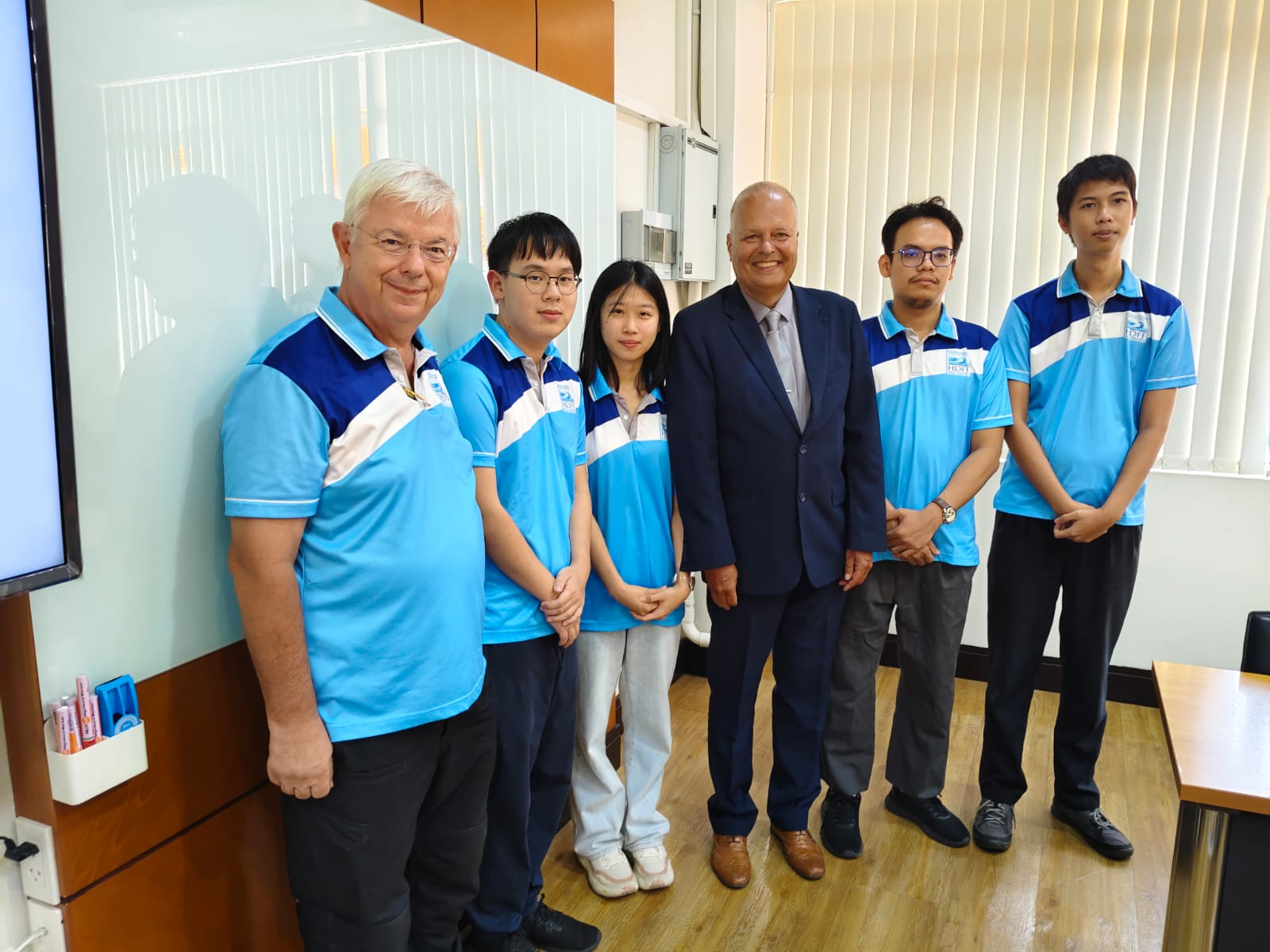
An Image of a HDFF Team with Dr. Jan Asmussen
Mr. Henning Glaser’s General Presentation on the Indo-Pacific’s Geopolitics
Mr. Henning Glaser started his presentation by revealing the “5 Mega Trends” that are defining current geopolitical situations. These were the global distribution of power, geopolitics, global order, globalization, and global risks. He underscored how these factors are contributing to the current geopolitical struggles of today due to their dynamic nature.
He went on to discuss the difference between “strategic coupling” and “theater autism.” He defined “theater autism” as an undue focus on one theater, while “strategic coupling” refers to how the actions in one theater can affect the situation in another theater. He suggested that strategic coupling is a better stance for countries to take, as it allows them to see a higher number of opportunities and allows for the development of more strategic plans.
This plays a role in the Indo-Pacific due to the increasing volatility in the region. This is partly because of China’s near seas that consist of the bodies of water that are bound by the country’s first island chain, namely the South China Sea, the Yellow Sea, the East China Sea, the Bohai Sea, the Philippine Sea, and the Sea of Japan. Although the Philippine Sea and the Sea of Japan are not officially considered near seas, China views the seas as crucial to ensure their maritime security. Currently, countries of the Near Seas, namely Japan, Taiwan, Malaysia, Brunei, the Philippines, and Vietnam, are increasing their military capacity, raising the likelihood of “non-linear escalation” and increasing the region’s volatility.
Other factors that are influencing the region’s volatility are the US National Security Strategy that aims to deter a conflict over Taiwan by overmatching China’s military capacity. Additionally, the removal of significant political figures in China, which reduces the government’s transparency, reduces military expertise, and centralizes Xi Jinping’s power.
In light of the volatility of the region, there are 4 modes of “Strategic Coupling” that the country and related actors can employ to quell possible tensions. These are the following:
- Mode 1: Portfolio Management
Actors try to balance the situation across the South China Sea, East China Sea, Taiwan, and global priorities rather than focus on one singular space.
- Mode 2: Graduated Escalation Across Space
Actors disperse the conflict among multiple theaters, preventing “immediate collision in the most sensitive arena.”
- Mode 3: Symbolic Relief
Actors demonstrate power without causing conflict or escalating in the most sensitive theater.
- Mode 4: Anticipatory Counter-Coupling
Actors predict that their opponent will employ coupling methods, allowing them to operate under “heightened complexity” and increased “strategic nervousness.”
In sum, Mr. Henning Glaser discussed the various factors contributing to the increasing volatility in the Indo-Pacific while elaborating on strategic coupling methods that the relevant parties may employ to prevent further escalation.
Conclusion
All in all, the seminar delved into the complexity of the geopolitical situation in the Indo-Pacific through both a broad and country-specific perspective. His Excellency Dr. Kanithasen started up the conversation with an interesting question of whether “might is right” while Dr. Jan Asmussen discussed his findings on the Vietnamese perspective of geopolitics, and Mr. Henning Glaser ended the conversation with an all-encompassing look at the volatility of the Indo-Pacific region with reference to “Strategic Coupling” and China’s Near Seas.
HDFF would like to thank the German-Southeast Asian Center of Excellence for Public Policy and Good Governance (CPG) for the invitation to this informative event, and HDFF’s team is looking forward to future opportunities.
Comments are closed