The Karen are an ethnic group native to the eastern region of Myanmar, along the border with Thailand. Traditionally, they have been known as farmers, cultivating rice in the hills and jungles of the region. During World War II, the Karen sided with the British, while the majority ethnic Burmese population supported the Japanese. Like many other ethnic groups, the Karen were promised autonomy and protection by the British after the war, but those promises were never fulfilled. When Myanmar gained independence in 1948, the new government became increasingly oppressive toward the Karen. Their distinct identity, including the fact that many are Christians, made them targets of discrimination and violence. Since independence, the Karen have suffered decades of persecution and ethnic cleansing at the hands of the military. The government has burned their villages, destroyed their crops, and violated their basic human rights in an effort to force them from their land.
This long history of displacement intensified after 1960, when the Karen were subjected to human rights abuses, including being used as human landmine detectors, widespread sexual violence, forced labor, and forced conscription into the military. In response to this brutal treatment, many Karen fled across the border into Thailand. While the mass exodus began long before the 2021 military coup, the ongoing violence against the Karen has continued to drive Karen families to seek refuge in Thailand, where many still remain today, stuck in refugee camps.
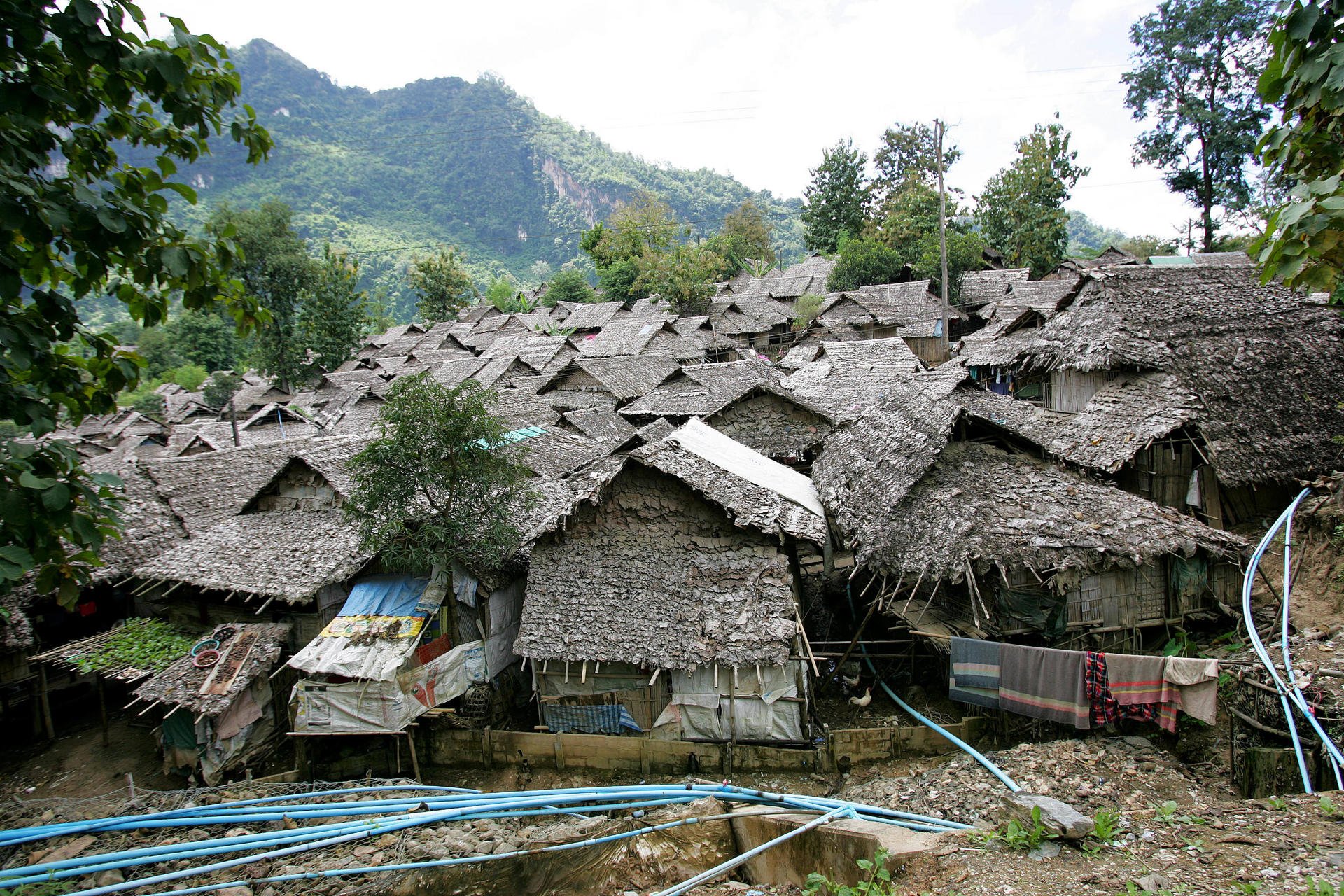
For over thirty years, tens of thousands of refugees have lived in camps along the Thai-Myanmar border. Thailand has provided refuge to Karen people for decades, allowing them to escape violence and persecution across the border. This long-standing hospitality has saved countless lives. But because these are officially classified as refugee camps, residents are only permitted to build temporary shelters, not permanent homes. Despite having spent decades there, refugees are not allowed to leave the camps freely, build lasting housing, or hold legal employment. This prolonged state of limbo has led to widespread depression, substance abuse, and suicide among many camp residents.
Refugees rely almost entirely on NGOs to meet their most basic needs of food, education, healthcare, and protection of their human rights. Yet, despite the length of their stay, Thailand has made no serious move to integrate them into society. While many of the Karen refugees have been resettled abroad, mainly to the United States and Australia, the vast majority remain trapped in overcrowded camps.
Generations of families have now been born and raised within the boundaries of these camps. Children attend school, grow up, get married, and raise their own children, all without ever stepping outside the fences. Many of them identify as Thai, loving the only country they’ve ever known. Yet they face a painful awakening when they realize that Thailand does not legally recognize them. They cannot pursue higher education, work legally, or envision a future beyond the camp walls. Despite their loyalty and love for Thailand, the government remains indifferent to their hopes. As time passes, camp populations continue to grow. Since the 2021 military coup in Myanmar, even more Karen have fled across the border, seeking safety and pushing the camps beyond capacity. The support systems in place, already limited, are now overwhelmed.
After decades in exile, many camps now function as self-contained communities. Refugees manage day-to-day operations with minimal outside involvement. But what does the future hold for them? Thai officials continue to speak of eventual repatriation, but for many Karen, returning to Myanmar is not an option. Their villages have been destroyed, their lands devastated, their homes burned, and their fields littered with landmines. Their hills are full of violence and fighting between the ethnic armies and the junta. Even if the resistance ousts the military junta, there is no guarantee the next government will treat Karen any better. The Karen have faced persecution since the end of World War II being marginalized, brutalized, and excluded in their own country.
After decades in Thailand, they have built new lives and communities. Many human rights defenders request from Thailand to recognize this and offer a path to integration. The Karen people have much to offer. With rights and opportunities, they could contribute meaningfully to Thai society. Rather than confining them in camps, they recommend that Thailand could embrace them as part of its future. Arguments have been made that if Thailand integrates the refugees it would be an economic burden or a security risk. The opposite argument is that if Karen refugees were allowed to work, travel, and participate in the economy, they would most likely contribute more than they consume. Many already consider themselves more Thai than Myanmar nationals, and are eager to contribute to the country they have known all their lives. While third countries have taken in thousands of Karen refugees, human rights groups advocate that Thailand should take some responsibility too.
For years, Thai officials have promised action, yet according to human rights groups nothing has changed. This is not only the responsibility of the global community. It has been decades of people living without freedom, dignity, education, or hope. Children are not receiving proper education, and young adults cannot pursue higher studies or earn a living. Families are left without means to provide for themselves. Thailand does not recognize the Karen as refugees, labeling them instead as displaced persons. Since it has not signed the 1951 Refugee Convention or its protocols, it has fewer international obligations. This leaves camp residents, according to human rights advocates, at the mercy of the Thai authorities, who can deport them without cause or even shut down camps entirely. This is a constant fear among Karen refugees. Living in remote hills and jungles, the camps have limited access to electricity and internet. Some advocacy groups point out that because they are not allowed to work legally, many Karen take illegal and often dangerous jobs, where they are easily exploited. Despite the risks, they continue working to support their families and survive. Allowing legal employment would not only improve their lives but also support the Thai economy. Many of these refugees are willing to take on jobs that Thai citizens avoid.
Despite decades of hosting Karen refugees, Thai authorities have yet to implement a long term solution. With major funding cuts from NGOs and international organizations, the situation is becoming unsustainable. As Karen culture is closely aligned with Thai culture, advocacy groups argue that integration is easier than many assume. Integration would not be a burden; it is an investment in a more just and inclusive future.
The Karen refugee crisis has been a ticking time bomb for. The world must not look away. Thailand’s role in sheltering displaced Karen communities should not go unrecognized. Thailand was gracious to help its neighbors when they were facing danger and persecution. Its willingness to keep borders open during waves of conflict has prevented a far greater humanitarian disaster. However, the lack of a global initiative with long-term planning has left refugees in prolonged uncertainty. Therefore, advocacy groups suggest a new phase one focused not just on survival, but on inclusion, opportunity, and stability for Karen refugees.
Sources
Don’t forget refugees as war continues to ravage Myanmar – Devpolicy Blog from the Development Policy Centre (February 2025)
Myanmar migrants forced to join junta forces after deportation from Thailand (February 2025)
Fortify Rights calls on Thailand to protect unaccompanied refugee children – ENG.MIZZIMA.COM (May 2025)
USAID Freeze Hurts Myanmar Refugees In Thailand – The Organization for World Peace (February 2025)
Trump’s freeze on US aid rings alarm bells from Thailand to Ukraine | Reuters (January 2025)
UNHCR presents first draft of repatriation plan – Thailand | ReliefWeb (July 2015)
Refugee camps cope with brain drain – Thailand | ReliefWeb (October 2011)
Myanmar’s ethnic Karen face food shortages amid aid cuts to camps on Thai border – Radio Free Asia (May 2025)
Karen Refugee Crisis | EBSCO Research Starters (2023)
On the run with the Karen people forced to flee Burma’s genocide | The Independent | The Independent (January 2007)
Myanmar Refugees in Limbo, Thailand in Denial (March 2025)
White House order halts Myanmar refugee resettlement deal with Thailand (February 2025)
10 Shocking Facts About Refugees in Thailand | The Borgen Project (April 2007)
Bangkok Post – Refugees in policy limbo (July 2025)
“I’ll Never Feel Secure”: Undocumented and Exploited: Myanmar Nationals in Thailand | HRW (July 2025)
Camps in Thailand – TBC | Theborderconsortium | (2021)
Don’t forget refugees as war continues to ravage Myanmar – Devpolicy Blog from the Development Policy Centre (February 2025)
Karen – EthnoMed (July 2008)
Comments are closed